When most people are planning an Italy trip, chances are they are thinking of Rome, Venice, the Amalfi Coast or the Tuscan hills. These are all amazing places to explore of course, but there is so much more to see in Italy. For us, having spent years traveling around both northern and southern Italy, along with the islands, one of the most intriguing regions is also one of the most overlooked. Lombardy is not only home to the energetic city of Milan, but also ancient historical sites and beautiful lakes, yet sees far fewer visitors than these places deserve.
Let us take you on a journey around the Lombardy region, and explain why making time for this part of Italy in your travel plans is an excellent idea.
Getting to Know Lombardy
One of the larger Italian regions, Lombardy stretches from the Italian Alps in the north down to the Po valley, bordered by Piemonte, Liguria, Emilia-Romagna and Veneto. Unusually for Italy, Lombardy has no coast, but it is covered in water, with the vast Po river to the south and multiple glacial lakes further north.
While it is not the largest region geographically, Lombardy is the most populous region in Italy and also contributes the most economically. Heading more lists, the region also holds the highest concentration of UNESCO World Heritage sites in Italy, with 11 of the country’s total 58 to be found here.
A Brief History of Lombardy Italy
Lombardy’s modern success is rooted in the rich history of this area. The fertile plains have attracted people for millennia, with incredible rock drawings found in the Val Camonica alpine area dating back to the 1st millennium BC. Many of Lombardy’s major towns and cities had already been established when the ancient Romans took control of the region in the 2nd century BC, with Etruscan and Celtic people settling here in the preceding centuries.
The Romans changed these settlements to become more Roman, focusing on a city they named Mediolanum. This city was at a crucial location, connecting Rome with the other northern regions and beyond, and became important politically as well as for trade and the military. Eventually becoming Milan, the city was at the forefront of early Christianity and was where many early basilicas were built.
After the Roman Empire fell, there was much less instability here compared to other parts of the empire. A Germanic people called the Lombards took control of northern Italy, giving the region its name, but held this control for centuries. This continuity and relative peace meant that people living here were secure, not constantly fighting battles.
Even when the region came under the control of the Holy Roman Empire, this security remained. Trade boomed, with large markets in agriculture, textiles and more being developed. Lombardy was already one of the most wealthy regions when the ruling family in Milan, the Visconti, created the Duchy of Milan in 1395 which included much of modern-day Lombardy.
Lombardy remained an economic powerhouse under the Duchy, but also became culturally important. Through the Renaissance artists like Leonardo da Vinci were encouraged and many masterpieces were created.
Modern Lombardy
This wealth inevitably attracted foreign interest, with Spain, France and Austria at various points vying for control through the 16th, 17th and 18th centuries. By the time talk of Italian unification was a genuine possibility in the early 19th century, Lombardy was all for it. The Risorgimento movement was extremely popular here, with Milan and the wider region enthusiastically becoming part of the new kingdom of Italy in 1861.
Lombardy adapted to the industrial revolution and remained one of Italy’s most productive regions through the 20th century. Even with the two world wars, this was still where Italy was at its most productive.
Today, Milan is home to the Italian Stock Exchange and is a major European financial center, as well as being the home of numerous Italian fashion houses and brands. The wider region is no less productive, with a huge agricultural market covering wine, milk and cheese, rice, wheat and much more.
These facts about economic output and size often are the main things people remember about Lombardy. While it is true that this part of Italy feels very different to Sicily or Rome, we love it precisely because it is different!
How to Reach the Lombardy Region
Hopefully we’ve got you interested in visiting Lombardy now, so the next step is reaching the region. Luckily, Lombardy has excellent transport connections, so whether you’re traveling internationally or from within Italy, you’ll have plenty of options.
There are three major airports around Milan, from where you can easily reach the other cities and towns in Lombardy, as well as the lakes. Milan Bergamo is primarily a hub for internal and short-haul European flights, so it is a good option if you are arriving from another European location. Located between Milan and the city of Bergamo, this is closer to Brescia and Lake Garda than the other two.
Milan Linate is the airport closest to the city center, but this also primarily handles domestic and short-haul routes. If you are traveling internationally, you’ll most likely come through Milan Malpensa, which is Italy’s second busiest airport after Rome Fiumicino. It’s about 50 km/30 miles away from Milan itself, but there is a dedicated train line which connects to the city so it feels closer. Malpensa is conveniently located for getting to Lake Como and Lake Maggiore, both of which are close by.
If you’re coming from within Italy, the fastest connections are by rail. There is an extensive railway network covering around 2000 km/1200 miles so it is easy to travel between the different cities and towns within Lombardy and beyond.
You can also come by road, with easy access via Italy’s major autostrade. It is a long way from southern Italian destinations like Naples or Rome, so we suggest taking the train to reach Lombardy and then renting a car if you’d like to explore by yourself to save time.
Milan Highlights
Milan is a must-see city. The style capital of Italy, Milan has a unique energy and atmosphere that we love to immerse ourselves in. Medieval castles sit next to Baroque palaces and churches and the towering Galleria Vittorio Emanuele II with its 19th century glass domed roof faces the Gothic style Milan Duomo. This city offers a different perspective of what it means to be Italian, and is a fascinating place to get to know.
You can read our Milan city guide here for lots more travel suggestions and advice, but for us, these are the top 3 things everyone should do when they visit:
1. Eat a Big Plate of Ossobuco with Risotto alla Milanese
There are a lot of delicious things to eat and drink in Lombardy (more on this below), but Milan has some truly stand-out dishes.
We never miss an opportunity to have a big plate of the creamy saffron risotto, topped with ossobuco (slow cooked veal). The unctuous meat falls apart on the plate, with the intense meat sauce combining perfectly with the delicate risotto. Yes, we cannot deny that this is a rich dish, but when done well, it is such a delightful treat!
2. Visit the Duomo Terraces
Milan’s cathedral is the largest in Italy (St Peter’s Basilica is bigger, but is within Vatican City, not Italy) and there is a lot to see inside the Duomo complex.
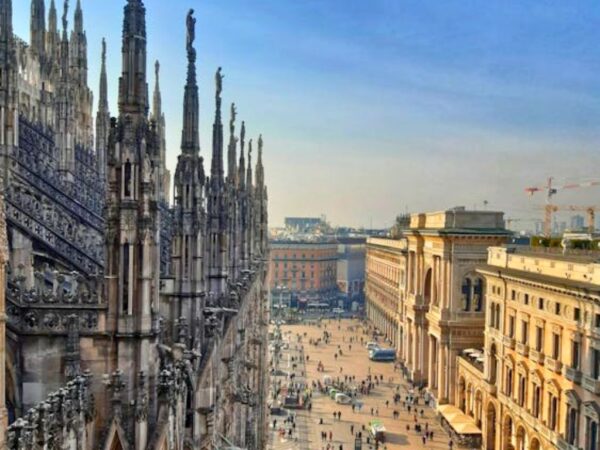
The best way to understand the cathedral however is to head up to the roof. Unlike other churches here, who have added rooftop climbs or access to the public in recent years, the Duomo roof was purposefully designed to be accessible.
Up here there are several terraces where you can get up close with the architectural ingenuity of the cathedral, admire the many statues and spires, as well as getting a magnificent view of the city all around you -old and new.
3. Marvel at Da Vinci’s The Last Supper
The other must-see in Milan is the world famous painting; Leonardo da Vinci’s The Last Supper. Painted by Da Vinci directly onto the wall of the refectory of the convent of Santa Maria delle Grazie at the end of the 15th century, it is a true masterpiece. Everyone has seen reproductions, but the real thing is breathtaking.
The painting is incredibly delicate so visitors are restricted to 15 minutes and numbers are strictly controlled. This means that you have to plan ahead to get tickets, which get released in two month blocks – find out when the next ticket release is on the official website here.
Other Cities to Visit in Lombardy
While Milan is a must-visit city for us, there are plenty more cities and towns that have lots to offer visitors. Many of these have similarly ancient origins to Milan and are packed with just as much culture and history, so it’s well worth exploring the wider region. Here are the major cities we love visiting in Lombardy:
Brescia
The city of Brescia is between Lake Garda and Lake Iseo, and is one of Italy’s oldest cities. Brescia is known for its rich history, including lots of ancient Roman ruins and the beautiful monastery of Santa Giulia (which together form another one of Lombardy’s UNESCO World Heritage sites). You can also visit the medieval Brescia castle and wander the historic city center where the layers of the city’s history are on full display.
Brescia is an ideal day trip if you’re staying at either lake, being less than an hour’s drive away.
Bergamo
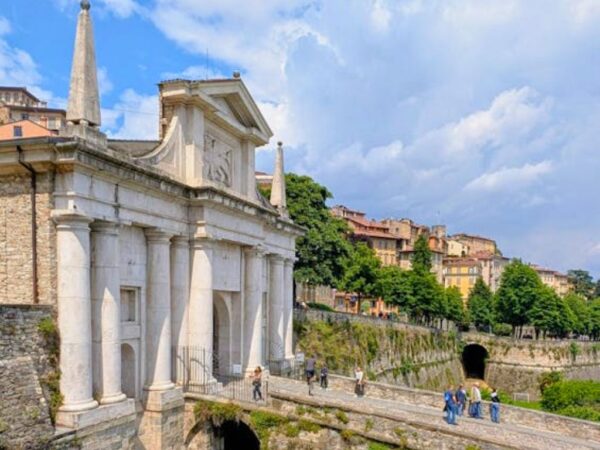
West of Bresica, closer to Milan, is the city of Bergamo. Home to another UNESCO World Heritage site, in Bergamo you will see two distinct parts of the city, one high up a hill and the other lower down. The Città Alta (the higher city) is completely surrounded by medieval city walls, built during the time when Venice ruled this part of northern Italy.
These walls and the hilltop location mean the structure and buildings of Bergamo haven’t changed much in centuries, making it the perfect place to stroll around and admire the views.
Cremona
To the south of the Lombardy region, on the border with Emilia-Romagna, is the small city of Cremona. Established by the Romans as a trading post and today a charming city filled with gorgeous Romanesque buildings, the main reason to visit Cremona is its musical legacy.
Starting in the Middle Ages, Cremona was one of the principal musical centers in Europe. Composers, musicians and singers would come here to learn and perform, and many of the best instruments were made in Cremona. One of the most important elements of musical heritage comes from Cremona too, as the finest string instruments were, and are still, made here, with Stradivarius the most famous.
We loved visiting the Violin museum which is on the edge of Cremona’s historic center and learning about the long legacy of the city – a must for any music-lovers!
Explore the Northern Italian Lakes
You cannot visit the Lombardy region without spending some time at one or more of the lakes located here. While you can arrange day trips, we think that spending at least one night is a great addition to a Lombardy travel itinerary to really make the most of your visit.
Lake Como
Let’s start with Lake Como, the most well-known lake in northern Italy.
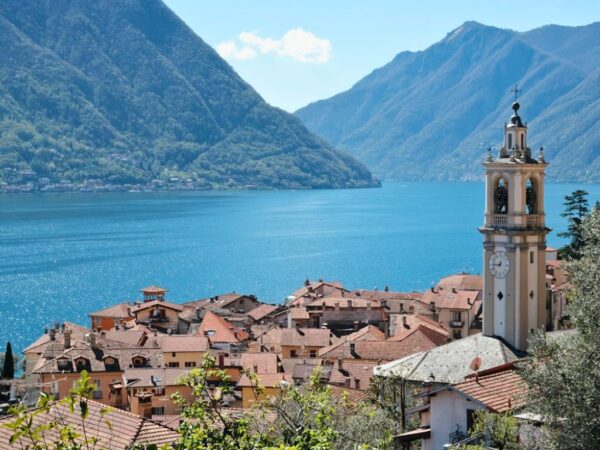
Stretching up to the border with Switzerland, Lake Como is spectacular. Tall mountains end at the deep blue water, and the shores are dotted with small towns and luxurious properties. Famous today for being the place to go for celebrities and the rich, Como has always been the place to be for the wealthy as far back at the time of ancient Rome.
Today most visitors focus on the central towns of Bellagio and Varenna, as well as the town of Como at the south end of the lake, but there is a lot more to Lake Como. Menaggio on the western side is a charming lakeside town with a beautiful promenade to walk along, and is much flatter than other Lake Como towns. Lecco, on the southeastern tip of the lake is much more local, with an elegant town center and access to some of the best hiking trails.
Lake Garda
If the summer crowds at Lake Como aren’t your thing, but you still want somewhere historic and with a lot of activity, try Lake Garda instead. Garda is Italy’s largest lake, with Lombardy on the west side and Veneto on the east, and as it is flatter to the south, is more accessible for visitors.

The historic towns of Sirmione and Salò are very popular during the summer season, but you will find lots more lovely places to visit and stay along the lake shore. The town of Desenzano del Garda is one of our favorite spots, with a colorful marina and ancient Roman ruins overlooking the beautiful lake. We also love Limone sul Garda, located at the north end of the lake, which is more mountainous and has a different feel to the towns to the south.
The entire lake has ferries that go between the different towns, which are much faster than going by road, so if you stay here make sure to check the local timetables for these boat services.
Lake Maggiore
The most western of all the Lombardy lakes (marking part of the boundary with Piemonte), Lake Maggiore is the longest lake in Italy. It winds down from the Swiss Alps, but despite its northern origins, the lake itself is surprisingly mild.
Warmer conditions in winter and cooler in summer mean that Maggiore is full of greenery. Both cultivated gardens and local plants and trees make this one of the more scenic lakes. We particularly like the gardens on Isola Madre which were created in the 18th century by the Borromeo family, who gave their name to a series of islands in the lake.
Maggiore is definitely quieter compared to Lake Como and Lake Garda. The focus here is more on enjoying the water activities, biking, hiking and natural beauty of the area, so if your vision of a lakeside retreat matches this, come here first.
Lake Iseo
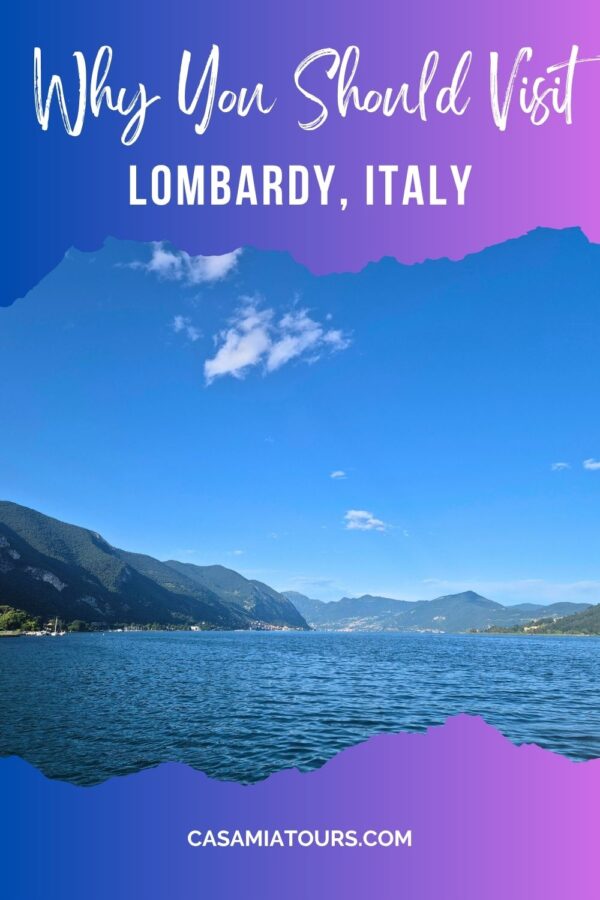
The quietest and least visited lake however is also our favorite; Lake Iseo. Iseo is smaller than the others but still one of the most picturesque lakes in Italy.
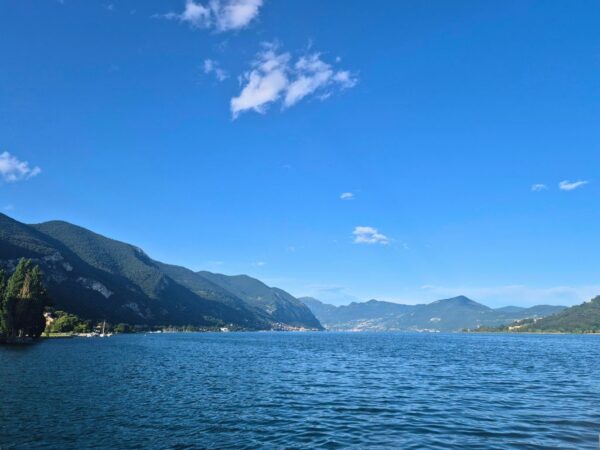
The southern towns of Sarnico and Iseo are ideal bases from where you can explore, with lots of boat trips as well as hiking routes to follow around the lake. They have a more local feel, with smaller visitor numbers, so prices for dining and accommodation are much lower than on Como or Garda. Don’t miss the island of Montisola, where you can walk up to the Sanctuary of the Madonna della Ceriola for incredible views of the surrounding water and mountains.
We also love visiting Lake Iseo because the southern banks are part of the Franciacorta wine region. One of the best Italian sparkling wines, Franciacorta is made using the metodo classico, similar to French Champagne. It is an excellent wine, and learning about the production in the local wineries was a highlight of a recent trip there – not to mention doing lots of tastings!
Visit Lombardy With Casa Mia
The region of Lombardy is so much more than just Milan. If you’d like to explore this underrated part of Italy, get in touch today to start the process of creating your Lombardy itinerary. From getting to know Milan to lakeside wine regions, we can help you create something truly special.