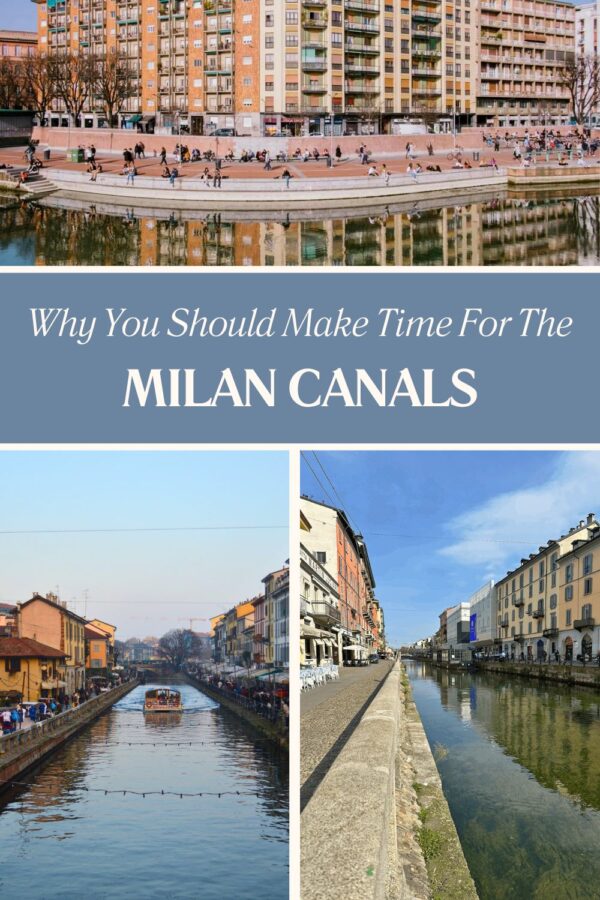
Most travelers think of Milan as the capital of fashion and finance in Italy, dominated by the magnificent Duomo and famous names like Versace, Prada, and Armani. This is not untrue, but there are other parts to this city that for us are a better reflection of Milan’s character. The Navigli district is the perfect example of this. This network of historic canals lined with colorful houses to the south of the city center, offers visitors a completely different perspective of Milan that we love. If you’re planning to visit Milan, this guide covers exactly why we believe the Milan canals deserve a top spot on your Italian travel itinerary.
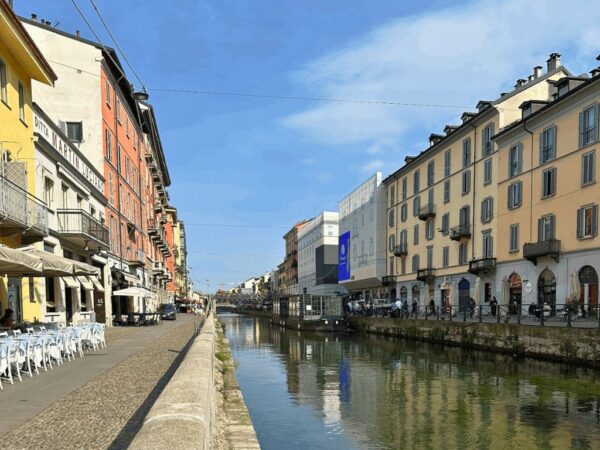
The Surprising History of the Milan Canals
Milan’s origins go all the way back to around 600 BC, originally founded by a Celtic tribe and then conquered and expanded by the ancient Romans. The area was highly prized because of its abundant water supply, with three major rivers and numerous sources of fresh water nearby. Both the Celts and Romans built different canal systems to divert this water where they wanted it to go, supplying fields with irrigation and water for the baths and fountains in the Roman city.
These ancient waterways were the basis for the Navigli, a series of artificial canals that were created starting in the 12th century and continuing through the following centuries. Milan was becoming more influential and needed these connections to other rivers and lakes in northern Italy for trading goods, irrigating fields and defending the city from external attacks.
Over the centuries the Navigli canals were constantly being added to or amended, and at one point Milan looked similar to Venice with waterways crossing the city. By the 14th century however, the canals weren’t good enough for the new dukes of Milan, and a large expansion and improvement program was started. The Naviglio Grande was expanded to allow the pinky-toned Candoglia marble used for the Duomo to be brought to the construction site directly from the quarries over 100km away.

Later improvements in the late 15th and early 16th centuries were based on plans designed earlier by Leonardo da Vinci, which modernized the locks and hydraulics of the canals.
Discovering the Navigli District Today
Milan’s Navigli district was the central hub of the city for a long time. Not only did they transport goods up and down the canals, the local people congregated along the banks for everything from fishing to laundry. You can actually still see the communal wash house used until the 1950s on the Vicolo dei Lavandai (Washerman’s Alley) close to Porta Ticinese.
However, by the early 20th century, many of the canals were not fit for purpose anymore. There were problems with slow water flow and waste build up, and there were also hygiene concerns for the people living nearby, leading to some canals being filled in. In the 1920s the increase in road traffic with the switch to cars and trucks meant that more canals were filled in and paved over to make way for roads.
While the larger routes like the Naviglio Grande and Naviglio Pavese only got busier thanks to industrialization creating huge amounts of goods to be transported, there were still major issues to be addressed. By the 1970s, it was clear that the practical function of the canals was no longer needed, and the final cargo was transported by barge in 1979.
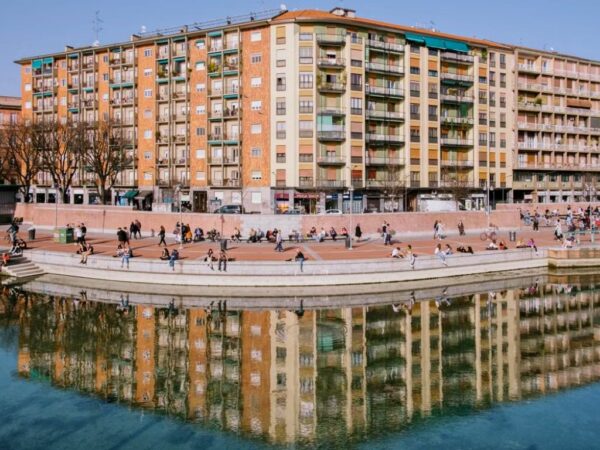
In more recent years, the canals and the artificial port of Darsena (originally built in 1603) have been cleaned and renovated. Milan has also added and improved the canal-side walkways, making the district a lovely place to live, work and visit. The main two canals still flowing today are the Naviglio Pavese, which connects Milan to the city of Pavia around 30km south, and the Naviglio Grande.
Enjoying the Ultimate Milanese Tradition
When the sun starts to set, the atmosphere of the Milan canals completely changes. During the day they are relatively calm and relaxed, but once the evening approaches, everything becomes more exciting.
The concept of Aperitivo is not unique to Milan, with excellent cocktails on offer all over Italy in the evenings, but we have to admit that they do it very well! Traditionally the aperitivo was a quick drink and a few snacks after work to relax, re-set, and prepare for dinner later on. Drinks were on the simple side, in Milan, where the strong Campari liqueur comes from, a Campari and soda or perhaps a Milano Torino (a mix of Campari and vermouth) were common.
However the Milanese developed this tradition into something more special, serving a wider range of drinks and more generous food portions. The term apericena indicates when the food on offer with your drink is more substantial, and could serve as a light dinner – perfect if you’ve had a large lunch or just aren’t that hungry.
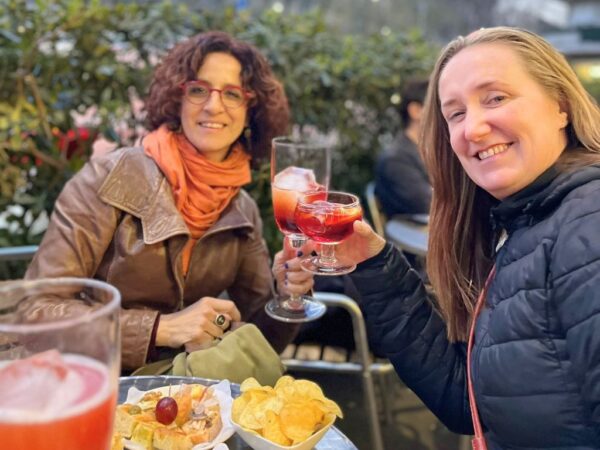
Nowadays you’re more likely to see Aperol spritzes being served in the Navigli district than a Milano Torino, but between around 6PM and 9PM, this is the place to be in Milan. Bars set up tables wherever they can, right on the banks of the canals, and do a brisk service through the early evening. The combined effect of the lights, music, conversation and laughter is infectious, creating a special experience that we love.
This is the reason we always end our Navigli district walking tours here, as enjoying an aperitivo like a local should be an essential part of your visit.
More Fun Activities to Do On and Near the Canals
While a lot of the focus on the Milan canals is often about the aperitivo scene, there are a lot more things to do here besides enjoying a spritz or two. Here are some of our favorite things to do and see in the Navigli district:
Shopping
Milan is well known for its fantastic shopping, with the city center filled with big name designer stores and boutiques. But if you’re looking for something truly unique to remember your trip, try to time your visit with these two big markets around the Naviglio Grande:
- Mercatone dell’Antiquariato: This antiques market takes place on the last Sunday of every month. Over 300 stalls are set up along the banks of the Naviglio Grande, with all sorts of items for sale. You’ll find furniture, books, jewelry, ceramics and more, and never the same thing twice.
- Fiera di Sinigaglia: This is Milan’s oldest flea market, starting in the 1800s. It takes place every Saturday along Ripa di Porta Ticinese, and is perfect for finding budget-friendly vintage finds and quirky trinkets.
If you can’t make it on the last Sunday or Saturday, don’t worry, you still have lots of excellent shopping options here. The streets around the canals are filled with independent boutiques selling clothing, purses and leather pieces, jewelry and accessories. There are also lovely art shops, bookstores and furniture stores, so you are sure to find something special to take home.
Along with the stores, there are also a lot of independent art galleries. There is definitely a bohemian feel to this neighborhood, so look out for hidden courtyards with artist workshops, local photography studios, and more along the canal banks.
Getting Out On the Water
Now that the navigili are not used for transporting goods anymore, they have become popular places to get out on the water.
There are a few clubs that offer kayaking or canoeing experiences at different points along the Naviglio Grande, Naviglio Pavese and beyond. While not suitable for complete beginners, this is an unexpectedly enjoyable way to see the canals. You can also arrange more extensive experiences that allow you to spend some time on the river Ticino, which is one of the rivers that feeds the canals.
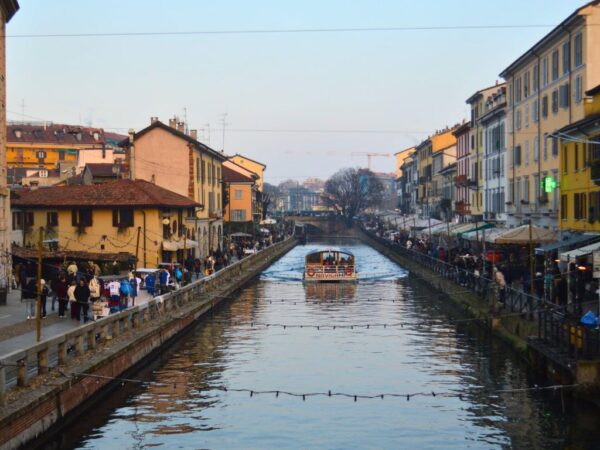
However, the easier and less strenuous option is to take one of the boat trips available for visitors. There are a few options that start at the Darsena and follow the inner ring of the canals. On a clear sunny day this is such a lovely thing to do, and gives you a different perspective of the canals.
Discover the Navigli District With Casa Mia
While it is easy enough to wander the navigli on your own, exploring with one of our local experts means you’ll get to learn about the layers of history hidden in plain sight and truly connect with the neighborhood.
The best part of our experiences is that they are designed around the local lifestyle. Your tour will wrap up right as the sun begins to set over the water, when we’ll stop at a local bar where you can sit back and enjoy a classic, refreshing aperitivo. Check out more details of our Milan Navigli experience here to make sure you don’t miss out on this special part of the city.