There is a lot to love about Milan. The fast pace, the beautiful fashion, the breathtaking Duomo and the incredible art all make this city a very special place to visit. However, the one element that often gets overlooked is the food in Milan, which we think should be far more celebrated! In this guide we’ll be sharing some of the best parts of Milanese cuisine, to inspire you to get to know Milan better and ensure you can enjoy lots of delicious bites when you’re here.

What Makes Food in Milan So Tasty?
Before we get into our specific recommendations, there are a few key reasons why Milanese cuisine is quite different from what is traditionally thought of as Italian food, in a very good way!
The large number of Italian immigrants to the US and beyond who took their recipes and food culture with them, spreading the idea of Italian cuisine around the world, were mostly from southern Italy. In these parts of the country, the key ingredients are olive oil, dried pasta, tomatoes and fish due to the climate and territory.
However in Milan and the wider region of Lombardy, there is much more space, the land is flatter and the climate is cooler and wetter. Farmers had the land to raise large herds of cattle, making butter the main fat, along with a wider availability of meat in general. They also had the land and weather conditions to cultivate large amounts of rice and corn when these crops were introduced to Europe in the 15th and 16th centuries. This means that the staple ingredients are quite different from what we see in the south, which created a completely different food culture.

External Influences on Milanese Cuisine
Milan has always been a crossroads, both literally with its position on major rivers and roads, and culturally. The city’s culinary roots stretch back to the ancient Celtic tribes who first settled here, along with the ancient Romans. Using the fertile lands and plentiful water supply, the Celts kept large numbers of pigs here, and also grew lots of wheat.
The Romans expanded the agricultural lands, with more fields planted and an increase in cattle too, giving the region a strong foundation to improve food production. This underwent a huge change in the 15th century when rice was introduced to Italy, as the low-lying fields in the Po river valley proved to offer the optimal growing conditions for this new crop.
Rice was quickly adopted as a staple food, laying the groundwork for the famous risotto. The following century corn was introduced from the Americas, and proved to be just as popular, with polenta becoming a cheap and easily accessible meal.
It wasn’t just new ingredients that were introduced however. New flavors and cooking techniques were also brought by the various foreign rulers that controlled Milan and the Lombardy region. In the 16th and 17th centuries the area was under Spanish rule, with saffron and other spices introduced which transformed traditional dishes. Later under Austrian rule, the concept of tenderizing and breading pieces of meat became widespread, and new foods like tomatoes, cocoa and coffee started to be incorporated into classic dishes too.
In the 20th century Milan changed again, adapting to fast industrial growth. Staple dishes were refined and while for a period it seemed Milanese cuisine was disappearing, a new generation of chefs have ensured that the food culture has been preserved for us to enjoy.
Unmissable Plates of Food in Milan
When you sit down at a traditional Milanese restaurant, you will likely see a list of dishes you haven’t heard of before. While we always recommend talking to your server for their recommendations and insight, the dishes below are unmissable when in Milan:
Risotto Alla Milanese
This is Milan on a plate – when done right. Risotto alla Milanese should be a bright golden-yellow color from high quality saffron, and have some fluidity without being runny.
It looks simple when on the plate, but this is one of the best traditional Milanese dishes for a reason. The risotto is infused with bone marrow, as well as being cooked with white wine and plenty of flavorful broth. The addition of a generous amount of butter and grated cheese makes the risotto alla Milanese incredibly creamy, showcasing the best of all those excellent local products.

Ossobuco
One of the more substantial traditional dishes in Milan, Ossobuco is made with tender veal shanks (sometimes beef) that have been cut across the bone so that you get some marrow. The meat is slowly cooked with vegetables, white wine and meat broth until the meat is falling off the bone.
Ossobuco is usually finished with gremolata on top, which is a punchy condiment made with lemon zest, garlic, and fresh parsley that cuts through the rich, savory flavors of the meat. Don’t forget to use a small spoon to scoop out the rich marrow inside the bone; it’s the best part!
Cotoletta Alla Milanese
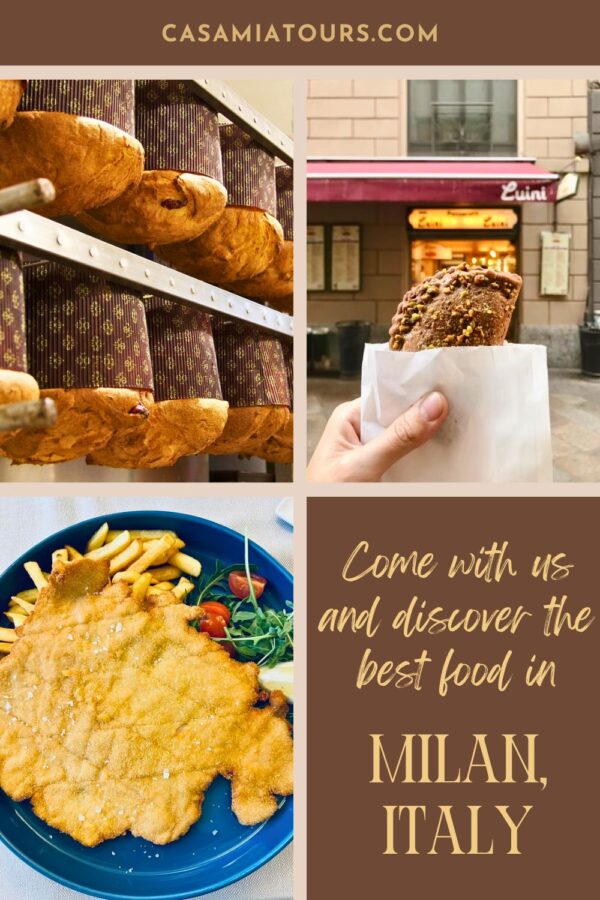
This dish is testament to the Austrian influences on Milan, but is not a copy of the thin Austrian schnitzel. A true Cotoletta alla Milanese is a thick, bone-in veal chop. It is dipped in egg, coated in fine breadcrumbs, and fried in butter until a crispy, golden crust forms while keeping the inside wonderfully juicy.
A thinner breaded veal cutlet version has become popular in recent years too, but while delicious, it is not the traditional Milanese dish. The thicker cut ensures the meat stays juicier, which we love. The cotoletta alla Milanese is finished with either more butter or a squeeze of fresh lemon juice.

Cassœula
Particularly good in winter, Cassœula has its origins in Milan’s ancient history. It is a rich, hearty stew made with inexpensive cuts of pork (like the ribs, rind, and sausages) and cabbage, usually served alongside polenta.
Cassœula is thought to be linked to the feast of Saint Anthony the Abbott on January 17 which marked the end of the pig slaughter season, when all the pieces of the pigs could be put to use. The pork and cabbage stew is not on all menus, but if you are somewhere traditional and have the chance to taste it, we highly recommend doing so!
Quick Bites In Milan
If you are exploring the city and need a fast, delicious lunch or snack, there are lots of choices in Milan that don’t involve a full meal.
Local Cheeses and Salumi
Thanks to Lombardy’s long history of raising animals, there is an almost endless selection of cured meats and cheeses to try in Milan.
Pop into a traditional deli to sample some of the best options. The staff can help you narrow down your options, but for first-time visitors we recommend starting with the classic Salame di Milano, a finely ground, delicate pork and beef salame. This can be paired with the local Gorgonzola (either the sweet, creamy dolce or the intensely tangy piccante version), Taleggio, a soft, aromatic, washed rind cheese or Grana Padano, a hard cheese somewhat similar to Parmigiano Reggiano but more mild and buttery.
Make yourself a picnic by adding some bread, giardiniera (pickled vegetables) and some wine for the perfect lunch.
Street Food
It’s not just cities like Naples and Rome that have amazing street food, Milan has plenty of tasty things to eat on the go – here are our favorites:
- Mondeghili: These are Milan’s legendary fried meatballs. Originally created as a way to use up leftover boiled meats, the pieces of leftover meat are mixed with breadcrumbs, milk, and mortadella or sausage, shaped into small balls, then fried in butter.
- Panzerotti: Originally from Puglia, panzerotti have become a Milanese street food staple. Introduced to the city by workers from Puglia in the early 20th century, the versions have evolved from the classic filling of tomato sauce and mozzarella to endless sweet and savory combinations.

- Michetta: This is the Milanese sandwich bread. A Michetta is a star-shaped, hollow bread roll with a crunchy crust. Because it is airy on the inside, it is perfect for stuffing with layers of cured meats for a quick meal or snack.
- Panino with Cotoletta: The on-the-go version of the classic cotoletta alla Milanese, this is a crispy, flattened cotoletta tucked inside a fresh Italian panino. Deceptively simple, dressed with a little lemon, we always make time for one on a trip to Milan.
Sweets and Pastries
Thanks to the prevalence of butter, cream and eggs from Lombardy, the options for sweet food in Milan are decadent and indulgent. You’ll find pasticcerie everywhere, as well as cafes offering rich pastries, cakes and tarts to go with your cup of coffee.

One important note about ordering in Milan, unlike in central and southern Italy, pastries are referred to as a brioche instead of a cornetto as the catch-all term.
Panettone
Now a Christmas staple in many places outside of Italy, panettone was created in Milan. It has been a festive treat for centuries, filled with candied citrus pieces and raisins and made with plenty of butter, eggs and sugar.
The version we know today comes from a Milanese baker, Angelo Motta, who opened his first shop in 1919 just a few blocks away from the Duomo. Panettone quickly became an essential part of Italian Christmas celebrations and has been popular ever since.
In Milan you will find versions of panettone year-round, as the sweet bread is delicious whenever you eat it. Our top tip for good panettone is always to get one from a bakery rather than a supermarket, as the difference in quality is vast.

Other Sweet Local Specialties
You can’t really go wrong choosing cakes and other sweet treats in Milan, but if you have the chance, these are some particularly special options to try:
- Barbajada: Invented in the 19th century by a waiter at the café next to the La Scala Opera House, this is a velvety hybrid of hot chocolate, fresh espresso, and milk, often topped with fresh cream. Some versions also add rum for an extra kick! Not as popular as it used to be so you won’t find it on every menu, it’s perfect for warming you up on a cold day
- Torta Paesana: This rustic cake comes from the countryside surrounding Milan. It’s a dense, comforting dessert made from stale bread soaked in milk, flavored with cocoa, amaretti biscuits, pine nuts, and raisins.
- Cannoncini: These are delicate, puff pastry horns filled to the absolute brim with fresh, silky pastry cream. For the best experience, visit a bakery where they fill them right in front of you so the pastry stays crisp for the optimal contrast between the flaky pastry and soft, sweet cream.
Milanese Aperitivo
You cannot visit Milan without experiencing aperitivo time. It is more than a pre-dinner drink; it is a cultural ritual with a long history. Traditionally it was a way for workers to unwind before dinner, where quick drinks were served with simple snacks. Over time the drinks and snacks evolved to more sophisticated versions, and everyone from college students to retired couples makes time for the aperitivo, but the fundamental spirit of taking time to relax is largely unchanged
Starting around 6:00 PM, the local bars start getting busier. Join in by ordering a Negroni or Campari spritz, or opt for a Milano Torino for a more traditional drink (which is a mix of Campari and red vermouth over ice). Campari is a Milanese drink so many aperitivo cocktails here feature the bright red, bitter liqueur.
For the best aperitivo atmosphere, grab a table at one of the bars along the historic Navigli canals, where the fun energy of Milan really comes alive as the sun sets. Check out our dedicated guide to the canals of Milan here to find out more about this neighborhood.

Taste the Best Food in Milan
Reading about the tasty food in Milan is one thing, but navigating the maze of historic streets to find the most authentic and delicious places to eat is another.
If you want to skip the guesswork, join us on our private Milan Orientation & Food tour. Led by a passionate local guide, you’ll explore some of Milan’s iconic landmarks while stopping at local spots to taste the food that shows why Milan is such a wonderful city to explore. It’s the perfect way to get to know Italy’s style capital while eating like a true Milanese – check out all the details and book your experience here.