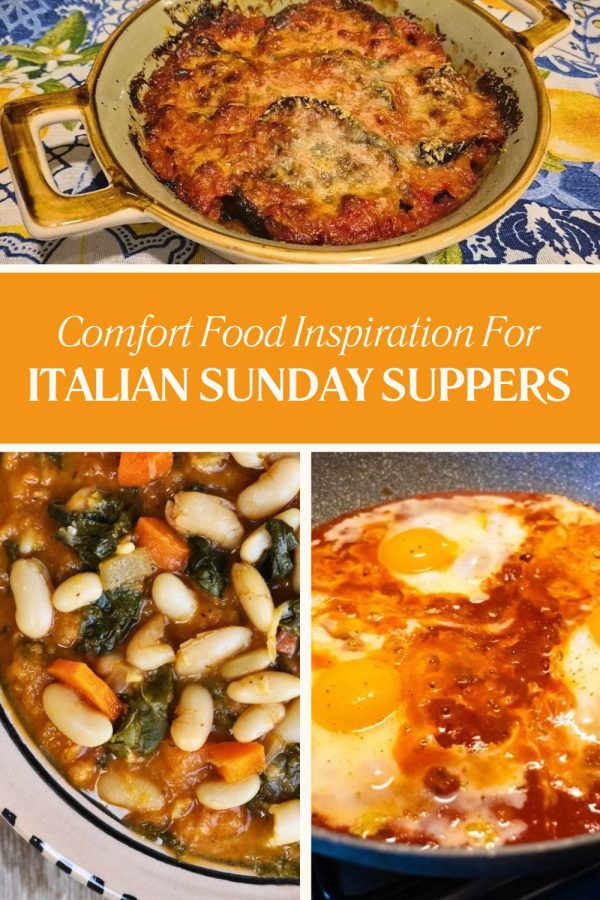
It’s officially the fall season now in Italy. Golden leaves are falling from the trees, the morning air feels crisp and our heavier jackets and boots are coming out from the back of the closet. After the long summer months where our focus is on creating quick meals that involve minimal cooking, we love the switch to cooler weather that means we can spend more time in the kitchen. Italian regional cuisine is full of wonderful recipes that are perfect for this time of year, so to welcome the shift to autumn, we’re sharing some of our favorite recipes for an Italian Sunday supper with you.
Uova in Purgatorio
This Neapolitan dish is one of our go-to comfort foods, which at its simplest is eggs cooked in a rich tomato sauce. The name means eggs in purgatory, which comes from the white of the eggs (representing souls) sitting in the red sauce (representing the flames of purgatory). It is thought to have been inspired by the influence of the Spanish who ruled Naples for a long time, as tomatoes were introduced by them.
Uova in purgatorio is the type of food you won’t find in a restaurant. You can make it in a small pan for one person or a large dish to feed a family, it can be eaten any time of day and can also be customized according to your individual taste. Depending on how much time you have, you can do a quicker or a more involved version, but the combination of classic Italian flavors like tomato and basil is always delicious.
Uova in Purgatorio Preparation
To prepare this dish, start with some olive oil and finely chopped onion in a pan over a medium-low heat. This pan needs to be the right size for the amount you are making, so don’t go too large or too small.
When the onion has softened, add tomatoes to the pan. Traditionally this is in the form of passata, or crushed tomatoes, but we’ve also made it with fresh and canned tomatoes too. Leave the sauce to simmer for around 15-20 minutes before turning the heat down and carefully cracking your eggs into the pan.
Allow the eggs to cook in the sauce for around 6 minutes for a runny yolk, top with fresh basil, season and serve with plenty of crusty bread for a perfect Sunday supper.
Using this base you can add in other vegetables or seasonings. Thin slices of bell pepper are often added with the onion, as well as garlic or chilli pepper for a more punchy sauce. You can swap the basil for fresh parsley or finish the eggs with Parmesan shavings or even little dollops of ricotta cheese depending on what you have.

photo © of GitoTrevisan Getty Images licensed through Canva.com
Ragù alla Bolognese
A proper Bolognese ragù is a staple of Italian cuisine all over the world for good reason. The rich, unctuous meat sauce is delightful when prepared correctly, and can be paired with far more than just spaghetti!
Ragù comes in many different forms in Italy, including a duck ragù in Veneto, wild boar and white variations in Tuscany and Umbria, and ragù Napoletano where whole cuts of meat are cooked in a tomato sauce. However, when thinking about investing the time into making some, we always come back to the version from Bologna.
While there are a few things that we are set on when it comes to making this ragù, certain elements are down to your personal preferences. Some people like their final sauce to be more or less tomato-focused, others skip the milk or add a little garlic. When it comes to comfort foods it’s important that you’re happy with the end result, so feel free to adapt recipes to your taste.
Making Ragù alla Bolognese
The base of a ragù alla Bolognese is the most crucial part to get right. You will need finely diced carrot, celery and onion for a soffrito, which you should cook slowly in order to get a really flavorful base. Butter or olive oil can be used, and some recipes include diced pancetta at the early stage too for extra flavor.
Once the soffrito vegetables are soft, add the meat. This should be a mix of beef and pork mince (more beef than pork). Turn up the heat and mix until the mince is nicely browned, before adding some wine (white or red) and then chopped tomatoes. Some versions reduce the tomatoes for broth, but the important thing is to have enough liquid for the meat sauce to simmer for around 2 hours without drying out. Towards the end of the cooking time, season with salt and pepper and add a little milk if you like, which gives the sauce an almost creamy finish.
Once done, you can use the ragù in a few different ways. Make a classic lasagna, serve it with savory crepes, on top of cheesy polenta or tossed with fresh egg pasta. Tagliatelle is the go-to pasta shape, but pappardelle is also a favorite of ours as the flat ribbons hold the sauce well. Spaghetti with its round shape is actually not a great choice as it doesn’t hold onto the ragù in the same way. Pairing this pasta with garlic bread however is something we have occasionally recreated at home for the childhood nostalgia!
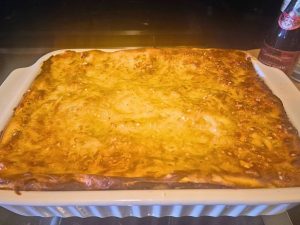
photo © Sara Maxwell
Parmigiana di Melanzane
Another Italian Sunday supper we return to over and over again is parmigiana di melanzane, which inspired the US eggplant parm. This dish seems simple at first, with layers of eggplant baked with tomato sauce and plenty of mozzarella cheese, but trust us, this is one you need to dedicate quite a bit of time to!
Below you’ll find the details of the classic version of this dish, but depending on where you are in Italy, you will find regional variations of the recipe. In Sicily you’ll find caciocavallo cheese used instead of mozzarella, Calabrian versions often include pecorino cheese and sausage, Emilia-Romagna recipes add layers of ham and in Naples smoked provola cheese is an extra tasty addition. In fact, the parmigiana style can be applied to other ingredients, so you can find different vegetables (especially zucchini) and also fish versions to try.
How to Prepare Parmigiana di Melanzane
Start by making a flavorful tomato and basil sauce. Saute finely chopped onions in olive oil before adding tomato passata or chopped tomatoes. Season with salt, tear in a generous amount of basil and leave to simmer until the sauce has thickened. Turn off the heat and set the pan aside in a convenient place for later.
Next move on to the eggplant. You’ll need to cut them lengthwise into even slices, but not too thin. Some people still swear by salting the slices before frying, but modern varieties are nowhere near as bitter as past ones so we don’t bother. Fry the eggplant slices in batches in plenty of oil (peanut or sunflower oil, not olive oil) until they are golden brown, and drain on paper towels as you go.
Once all the eggplant is fried, you can start assembling. In a baking dish add a layer of the tomato sauce, then a layer of eggplant slices, topped with plenty of finely grated parmesan, basil leaves and diced mozzarella cubes. Repeat the layers until you run out, making sure to keep a good amount of the cheese for the top layer, and then bake for around 30 minutes.
A big slice of parmigiana paired with fresh crusty bread and a crisp green salad is just what you want on a Sunday evening. Even if you don’t plan to feed a large group initially, it’s worth making a large dish as it keeps well and is even better the next day.
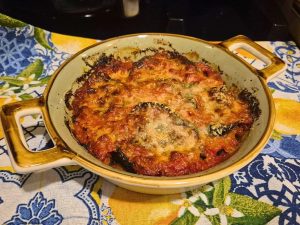
photo © Sara Maxwell
Brasato al Barolo
Another meat dish we enjoy as a real treat in the cooler months is brasato al Barolo, from Piemonte. Using the famous Barolo wine from the town of the same name, this beef dish is definitely one to make when you’re having people over or want to treat your family.
This is also a dish you need to start preparing well in advance. The day before you want to cook the beef, you will need to start with an overnight marinade, including the Barolo wine, vegetables, herbs and spices. Then the meat and vegetables are slow cooked in the marinade for hours which leaves it perfectly tender.
In the northern region of Piemonte, meat was more widely available than in other parts of Italy, so recipes like this using both beef and top quality red wine are not unusual. It gets pretty cold in Piemonte so a big plate served on top of rich mashed potatoes or polenta is really comforting.
Check out Eleonora’s detailed recipe here to make brasato al Barolo yourself, coming from her Piemontese Nonna’s recipe.
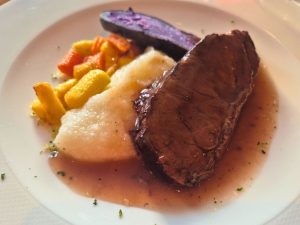
photo © Sara Maxwell
Ribollita
The final instalment in our collection of Italian Sunday suppers is one we turn to again and again; ribollita. This Tuscan soup is full of delicious vegetables as well as beans and bread, and you can easily save portions to have later in the week too.
A lot of traditional Tuscan cuisine comes from the practice of using up every scrap of food available, and ribollita is the perfect example of this. Cooking up whatever vegetables are available, along with beans and stale bread was a way of stretching out the limited food that poorer people had.
As food availability increased, ribollita evolved to be a bit more refined, but at its roots the soup is still a dish that is hearty, comforting, and full of goodness – just what you want on a cozy fall Sunday afternoon.
Make Your Own Ribollita
Soak dried cannellini beans in cold water overnight. The next day, start by preparing all of the vegetables. Traditionally these are cabbage, potatoes, onions, celery, carrots and chard, but feel free to use up what you have – ribollita is a great way to clear out the fridge! Softer vegetables like pumpkin or spinach should be added towards the end of the cooking time however so that they don’t completely fall apart.
Cook the beans in fresh water with herbs like rosemary and thyme until soft. Drain but keep the cooking broth for later, then blitz half the beans into a puree.
In a large pot, add the chopped vegetables and fry off for around 10 minutes, before adding the bean puree and the reserved cooking broth. Season with salt and pepper, and add extra water as needed to ensure the vegetables are covered. Bring to a boil and simmer until all the vegetables are nice and soft (around 1 hour).
Add the cooked beans to the pot, as well as big chunks of stale bread. Make sure these are fully covered by the broth (top up with vegetable stock if needed). Put a lid on the pot and turn off the heat, leaving the mix to cool. If you want to eat sooner, put the pot in the fridge for a couple of hours, or you can leave it overnight for maximum flavor.
When you’re ready to eat, give everything a good stir and heat up, adding more stock if needed. Serve with a generous drizzle of good olive oil.
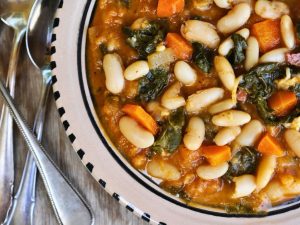
photo © of Paul Velasco Getty Images licensed through Canva.com
Inspired to Create Your Own Italian Sunday Supper?
We have a huge selection of different Italian recipes ready for you to create your perfect Sunday supper which you can browse here. If you’d rather learn about Italian cuisine in person, we also have a huge range of special tours where we show you what Italy is really like. Whether you want to taste the flavors of Venice, try street food in Rome or explore the markets of Ortigia in Sicily, we are here to create your perfect Italian experience. Get in touch today to find out more.