Fall in Italy comes slowly. The end of the summer heat tends to linger well into October, and then all of a sudden the wind feels cooler, the days get shorter and we start dreaming about warm soups and cozy mornings. One of the main signs that the autumnal weather is here is the sweet smell of roasted chestnuts starting to fill piazzas all over Italy. Chestnuts in all forms are very popular here, and have been for generations, so when they start appearing, everyone gets excited. Below we bring together the ingenuity of how Italians adapt and make the most of seasonal ingredients, along with some of our favorite recipes. Ready to find out how Italians enjoy chestnut season?
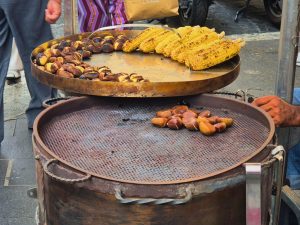
photo © Sara Maxwell
The Heart of the Italian Chestnut Season
Chestnut season starts in late September, running through until November in Italy, with most regions seeing their peak harvest in October. In southern Italy you’ll see chestnuts appear in local markets slightly earlier, while the mountains of the Apennines and Alps often continue to harvest chestnuts into late November and early December. Peak availability is in October and early November, but traditionally you’ll see fresh chestnuts until around February.
Chestnuts have an ancient history in Italy. They were grown and frequently consumed by the Etruscans and Greeks long before Roman roads criss-crossed the country. Prized more for the quality of the wood than as a food, the ancient Romans planted thousands and thousands of sweet chestnut trees across Europe.
The widespread availability of these trees meant that they served as a vital food resource for the poor, as well as a back-up in times when grain harvests failed. Chestnuts are very nutritious, so eating them kept people fulfilled. The chestnuts could be eaten in all sorts of ways, and the trees were sometimes referred to as l’albero del pane – the bread tree. Harvested chestnuts were dried out before being ground into flour that could be used for baking or to make a form of polenta.
Many of the traditional recipes have survived and are now celebrated as part of the special Italian regional cuisines. Chestnut season sees fun festivals take place all over Italy to taste and enjoy the local varieties, as well as getting out into the woods to forage for them.
Sagre di Castagne
Every October and November, sagre di castagne (chestnut food festivals) take place across Italy to celebrate the harvest. These vary from town to town, with lots of local customs to discover, but the idea is always to share in the enjoyment of eating chestnuts.
Some of the most well-known sagre are those in Cuneo in Piemonte, Combai in Veneto, Marradi in Tuscany, Montella in Campania, and Soriano nel Cimino in Lazio. These festivals include activities such as tasting events, walks in the countryside to see the trees in person, exhibitions, music, crafts, local history celebrations, cooking demonstrations and more.
These are generally held in October and early November, so it’s well worth looking for local listings if you’ll be in Italy in the fall.
What is the Difference Between Castagne and Marroni?
In Italy you will see chestnuts that are sometimes called marroni, and some castagne.
Marroni are a particular variety of Italian chestnuts. They are larger, rounder, sweeter, and easier to peel, and are grown on cultivated trees. Castagne are the fruit of the wild chestnut tree, and are usually smaller, often flatter on one side, with the inner skin more tightly attached.
Due to their enhanced flavor and shape, marroni are generally used for premium products and desserts, while castagne are perfect for roasting and making flour, with a more nutty taste.
Roasted Chestnuts in Italy
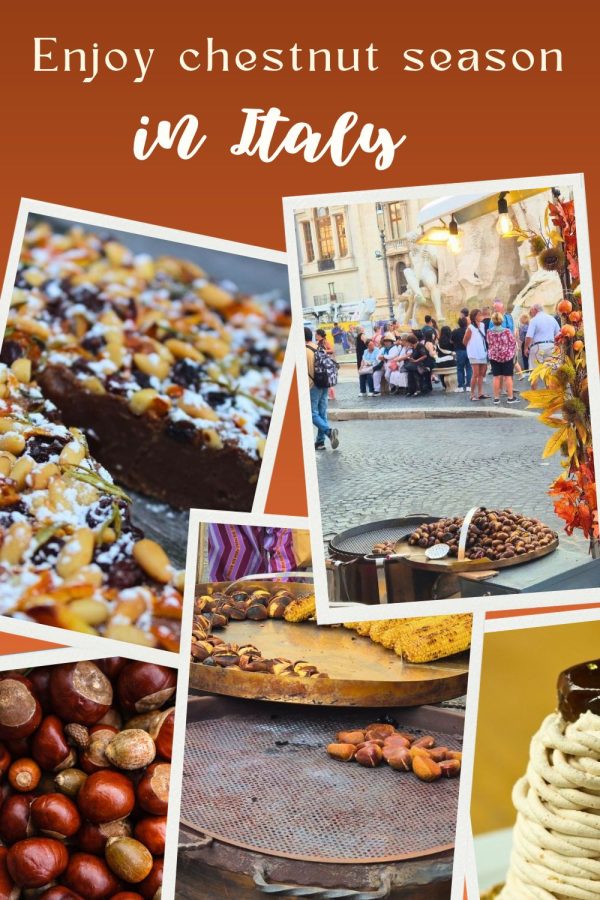
As soon as the mornings turn cooler, the caldarrostai start to appear. These street vendors roast chestnuts in the open throughout chestnut season, setting up large perforated pans over charcoal or gas flames on busy street corners.
The setup is simple but mesmerizing to watch. From large bags of chestnuts, the vendors score the tough outer shell with a X before adding them to the hot pan. As the chestnuts roast, the outer layer gets charred and smoky but the inside stays wonderfully soft. The hot, roasted chestnuts are served in paper cones, to allow you to snack on the go.
Before refrigeration, roasting was one of the few ways people could enjoy fresh chestnuts (as eating them raw is not pleasant), and the practice has carried seamlessly into modern day. You’ll see pans of roasted chestnuts for sale at Christmas markets and winter food festivals as well as on the street all through the colder months. We find them a wonderful treat on cold days!
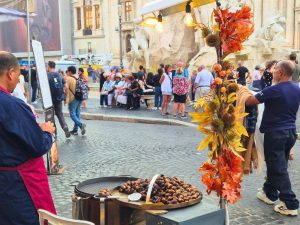
photo © Sara Maxwell
How to Roast Chestnuts the Italian Way at Home
If you want to roast chestnuts at home too, you can make oven roasted chestnuts. The flavor won’t be quite the same as those sold on the street, but it’s a pretty good alternative!
When roasting chestnuts at home, ensure the inner nut has been removed from the prickly shell, and check that the outer shells are smooth, shiny, and firm with no cracks, holes, or mold. The nut should feel heavy for its size, with minimal give when squeezed. A rattling sound inside or a very light feel usually means it has dried out and will not roast well.
To start, use a small sharp knife to cut an X on the flat side of each nut before cooking to prevent popping. Preheat your oven to 400°F (200°C). Soak the chestnuts briefly in water if you want to reduce the risk of burning, then spread on a baking sheet. Roast the chestnuts for around 30 minutes, until the outer skin opens.
After roasting, wrap the hot nuts in a clean, slightly damp cloth or drop them into a paper bag for 5–10 minutes. The steam loosens the inner skin and makes them far easier to peel.
More Tasty Ways to Enjoy Italian Chestnuts in the Kitchen
In Italy, chestnuts are not just for roasting. They can be boiled, dried, or ground into flour to then be used in a wide range of recipes – both sweet and savory. You can prepare your own chestnuts from fresh or purchase cooked and peeled chestnuts that have been sealed, depending on how you want to use them.
Here are some of our favorite dishes that we look forward to during chestnut season:
Castagnaccio
This is one of the most traditional ways to still enjoy chestnuts. Castagnaccio is a traditional Tuscan cake made from chestnut flour. The natural sweetness of the chestnuts, along with pine nuts and raisins, means that there is no added sugar in the recipe. Baked in a flat pan with rosemary and a little olive oil, the end result is something really special. You’ll see versions of castagnaccio all over Tuscany and Liguria in the fall, so if you’re visiting Florence’s markets you’re sure to be able to try it.
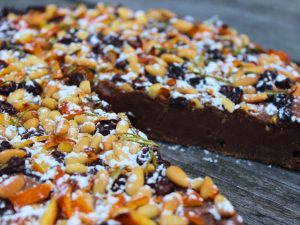
photo © of VincentvdW Getty Images licensed through Canva.com
Chestnut Soup
There are lots of different versions of chestnut soup out there, combining them with porcini mushrooms, lentils, chickpeas, pumpkin and more, or as part of an autumn minestrone. The first step with any soup including chestnuts is to boil them for around 45 minutes in salted water, and then you can combine them with whatever other ingredients you want.
Monte Bianco Dessert
There are all sorts of delicious cookies and desserts which feature chestnuts, but one of the absolute best (to us!) is the Monte Bianco. Named for its resemblance to the highest peak in the Alps, you may know it by its French name – Mont Blanc.
Soft boiled chestnuts are peeled and then simmered with milk, sugar and vanilla before being pureéd. To this mixture cocoa powder and rum is added, and then from this thin strands of the chestnut pureé are piled up to form a mini mountain. Topped with whipped cream or pieces of candied marroni, this dessert is incredible!

photo © of Kung_Mangkorn Getty Images licensed through Canva.com
Chestnut Pasta Dishes
Chestnut flour and chestnuts themselves are used in all sorts of fall pasta dishes too. In the Appenine mountains in central Italy, there are many examples of pasta dough made using chestnut flour, which is then boiled and tossed with butter and sage leaves or pesto. We have also enjoyed hearty pastas using cooked chestnuts paired with sausage meat or crispy pancetta, or roasted squash and mushrooms. Served with a glass of local red wine, these rich flavors sum up everything that is good about fall in Italy.
Learn More About Italian Seasonal Traditions With Casa Mia
We are extremely passionate about showing our guests the authentic side of Italy, whether that is tasting locally made produce in the markets of Florence or accompanying a truffle hunter through the woods in Piemonte. If you’d like to experience how Italians enjoy chestnut season first-hand, get in touch with us today to see how we can create something custom, based around what you want to see and do during your trip.