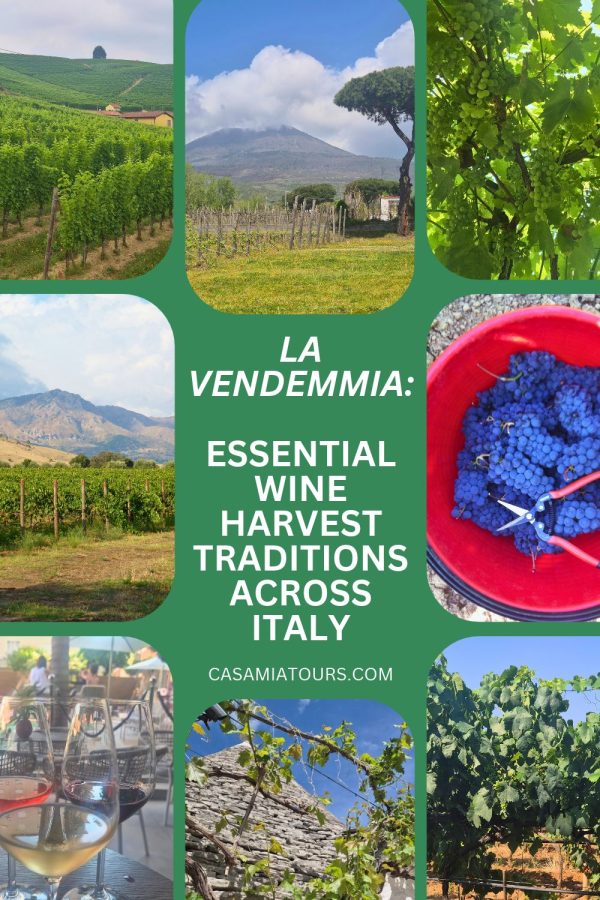
As the heat of summer starts to fade, preparations in vineyards all over Italy start for La Vendemmia, the annual grape harvest season. The exact timings vary depending on the grape variety and location, but for anyone involved in wine production, this point of the year is crucial. We love Italian wine, and the passion that winemakers have, so to get you excited for the new batches of wine being created right now, in this blog we explain the wine harvest traditions across Italy.
photo © Sara Maxwell
What Is La Vendemmia?
La Vendemmia is the Italian term for the yearly grape harvest that sits at the heart of wine production and rural life across Italy. As well as picking the grapes, which is often done by hand, La Vendemmia includes the initial crushing or pressing and the start of the fermentation process too. The results of the harvest allow the producers to decide the character and flavor of the final wines, with the choices made during these weeks shaping every glass of Italian wine you’ll ever drink.
The harvest is brought in by the whole community, with lots of people coming together to pick all the grapes at the optimal time. There will be communal meals and celebrations when the harvest is complete, so the Vendemmia is as much a cultural ritual as a practical necessity.
We often get asked if Italians still crush the grapes by stomping on them, but as much as Italians love their traditional practices, this is not one that has continued! For hygiene reasons, as well as the inconsistency of human-based grape crushing, this is not how wine is made anymore. However, you may see staged ceremonial grape-stomping events take place during wine festivals which are a fun way of preserving the centuries-old tradition.
The Ancient Roots of La Vendemmia
The traditions of the Italian wine harvest go all the way back to ancient Rome. Festivals were held every August to mark the start of the harvest season, with offerings made to Bacchus (the Roman god of wine and agriculture) and priests symbolically cutting the first grape cluster.
Wine was the primary drink for centuries, before clean running water became widely available, and even so after the end of the Roman empire, the annual grape harvest remained vital. Monasteries and large aristocratic estates maintained huge vineyards, bringing together the local people living under their rule to complete the harvest each year. Large feasts would be held once all the grapes had been picked to bring all the workers together.
Even after the phylloxera crisis of the late 19th century, which destroyed vast numbers of vines and the modernization of wine production in the 20th century, in Italy it is still very common for the grape harvest to be done largely by hand and by the people directly involved in the wine production. In fact, when you see depictions of wine making throughout history, the baskets, presses and curved blades used to cut the bunches of grapes off the vine look very similar to what is still used today.
When Is Grape Harvest Season in Italy?
La Vendemmia typically spans from late August to early October, although the start and end dates can be a little earlier or later depending on where you are in Italy. The particular grape variety will also determine the ideal time for picking, along with latitude, altitude, and weather conditions in any given year.
Producers will go out to their vines regularly to check how ripe the grapes are, as well as checking the weather forecast a lot before making their decision, so there is not a fixed calendar date. They will also monitor the sugar levels in the grapes, the acidity and tannin ripeness. This process of tasting and testing the grapes before harvesting is known as assaggio dell’acino, and is done daily.
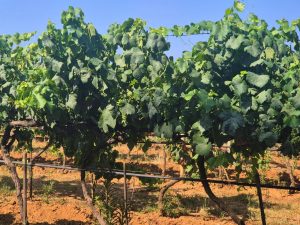
photo © Sara Maxwell
In the warmer parts of southern Italy, particularly in Sicily, the grapes are often ready by mid-August. In cooler, high-altitude northern vineyards, the harvest often doesn’t start until late October.
Climate change is having a significant impact on wine production in Italy, so the traditional timings are getting a little shorter. Particularly in northern Italy, the harvest is taking place earlier in the season because it is warmer and the grapes are ripening sooner. In the south where daytime temperatures can be intense in August, some producers have started harvesting at night which preserves the quality of the grape.
Harvest Traditions in North Italy
Northern Italy’s cooler climates produce some of Italy’s most famous wines. This is the place to come to savor wine varieties like Barolo, Franciacorta, Prosecco and Amarone, and during the harvest season there are lots of opportunities to join wine tastings.
Piemonte
In the misty hills of the famous Langhe wine region, family crews and vineyard workers begin with early-ripening Dolcetto and Barbera grapes at the start of September. Then comes the grapes for the most well-known Piedmont wines; Barolo and Barbaresco. Made with the native Nebbiolo grapes, these are usually harvested in October, often stretching into early October or beyond depending on elevation.
The town of Alba’s famous white truffle festival coincides with the grape harvest, combining two of the region’s best, and most delicious, traditions.
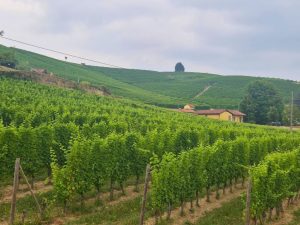
photo © Sara Maxwell
Veneto
The northern region Veneto is famous for two very different wines; the light, bubbly Prosecco and rich, deep Amarone della Valpolicella. There are also fabulous white wines from Soave, fruity reds from Bardolino and more. As the varied Veneto wines come with very different requirements, the grape harvests in the region vary considerably depending on where you are.
Glera grapes for Prosecco come in around mid-late September so as to preserve their acidity, while the white Garganega grapes for Soave hold on for another couple of weeks. Later in September and into October the red Corvina and Rondinella grapes start to be picked. The perfectly ripe grapes that are chosen to be used for the top-quality Amarone laid on wooden racks for the appassimento process now too. This process dries out the juicy grapes for a few months to concentrate the sugars and flavors before being pressed.
Lombardy
Not known as a wine region in the way other northern areas are, Lombardy is home to one of our favorite Italian wines; Franciacorta. Produced in the province of Brescia, this DOCG sparkling wine is made using the same metodo classico process as is used to make Champagne. This means that the grapes for Franciacorta (mostly Chardonnay with some Pinot Nero and Pinot Bianco) need to be picked early, when sugar levels are low.
Traditionally the Franciacorta grape harvest starts in early August, but this year for the first time it actually started at the end of July. So, if you’re visiting Milan and Lombardy during the summer months, you may well be able to experience some of the harvest season too.
Central Italian Wine Regions
Central Italy is where you will find the most classic fall scenery and weather. Rolling hills in Tuscany and Emilia-Romagna are lined with vineyard rows, the trees are starting to turn golden yellow and it is idyllic. You won’t be alone here as it is an extremely popular time to visit this part of Italy, but we love it all the same!
Tuscany
Harvest season in Tuscany runs from August to late October, with the wide variety of conditions and grape varieties making it a prolonged period.
Along the coast where it tends to be warmer, the grapes for white and rosé wines start being picked in mid August. Then, the red Sangiovese grapes which are essential for Chianti and Brunello di Montalcino start being picked in mid September, although the more select grapes for Brunello are left a little longer to ensure they achieve full ripeness.
As the grape harvest season comes to an end, the olives are ready to be picked and pressed for the first batches of olive oil, plus the truffle season starts. This combination makes late fall a wonderful time to explore Tuscany, with lots of wine festivals and other culinary events taking place.
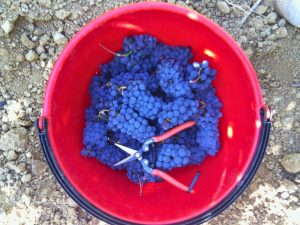
photo © Casa Mia Tours
Emilia-Romagna
Often praised more for the local food than its wine, Emilia-Romagna has plenty of great vintages to accompany the famous balsamic vinegar, Parmigiano Reggiano, Prosciutto di Parma, fresh egg pasta and more.
The grapes for the very special sparkling red Lambrusco, which comes in a range of dry to sweet versions, start to be picked in late September, often stretching into October. Earlier in the season the grapes for the still red Sangiovese di Romagna (a perfect pair for the local meats and cheeses) are harvested, as well as the native white Pignoletto grapes.
Southern Italy Harvest Traditions
In the south, La Vendemmia operates a little differently. Temperatures are still high at the start of the season and where some grape varieties need to be harvested early, workers have to avoid the fruit getting ruined by the hot sun. Rather than long days in the vineyards, the harvest often begins before dawn in August. Those first few hours of daylight are intense but by midday the outdoor work is done.
Some other local varieties benefit from the warmer fall weather and are left on the vine until late October. The warm conditions in southern Italy gives the wines produced here a special intensity, worth the extra speed and work needed!
Puglia
As one of the longest Italian regions, the terrain in Puglia varies from rocky, high altitude hillsides to low coastal stretches. This means that depending on where you are in the region, the local grape harvest could be anywhere from August to early November.
In the Valle d’Itria, the hilly area in central Puglia that includes Alberobello and Ostuni, the grapes grown here are mostly white. The harvest for the grapes destined for sparkling varieties starts in August, with the grapes for the still wines such as Locorotondo and Martina Franca picked in September.
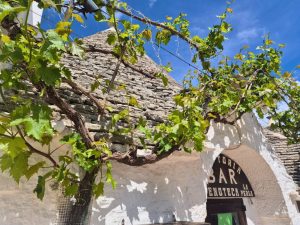
photo © Sara Maxwell
Further south near Salento the land is much flatter and the hot climate is better suited to red wine production. Puglian reds such as Primitivo and Negroamaro tend to be more robust, with thick-skinned grapes that do not shrivel up under the sun. Some grapes for Primitivo are picked at the end of August but generally the harvest here takes place through September and October.
Campania
In the coastal region of Campania, later harvests are the norm too. Between the high elevation, volcanic soil and consistent temperatures, September is the start of the season here.
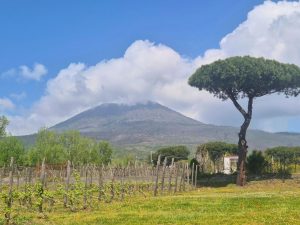
photo © Sara Maxwell
White grapes including Falanghina, Fiano di Avellino and Greco di Tufo are picked first. These thrive in the mineral-rich, volcanic soil of the region, giving the final product a floral finish. Picking them too early leads to high acidity, so they are left on the vine a little longer than other Italian white varieties.
The ancient red grape Aglianico, which is common across southern Italy, also loves the volcanic soils of Campania. There are a few areas known for Aglianico, but our favorite is Taurasi, from the Irpinia region. The longer growing season of these grapes means that the harvest doesn’t generally begin until mid October and can sometimes go into early November.
Sicily
Sicily is home to some of Italy’s most dramatic harvest scenes. On Mount Etna’s terraced volcanic slopes, most of the grape harvest is done by hand as machines cannot operate on the steep terrain. Sicily is also home to the longest harvest season in Italy, stretching from July to late October.
Grapes for sparkling wines are harvested first in July, before they get too sweet under the hot Sicilian sun. Then other white grapes are ready in August, particularly on the western side of the island, before classic Sicilian varieties like Grillo and Nero d’Avola start being picked in September. In early October the harvest of the late-ripening grapes that grow on Etna, such as Nerello Mascalese begins, along with the special grapes reserved for the fortified wine Marsala.
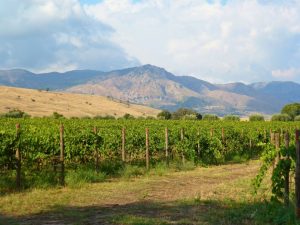
photo © Eleonora Baldwin
Taste Italy’s Amazing Wine With Us
There is nothing we enjoy more than trying a new wine variety or vintage, and the annual grape harvest is always an exciting time as we know more bottles are on their way. Walking around the vineyards, taking a wine tour to understand a producer’s vision and meeting local winemakers (not to mention tasting the wines) is one of the best ways to experience Italian wine. We love sharing this with you, and have a wide range of wine-based experiences across Italy that you can choose from. Whether that’s exploring the Valpolicella wine region in Veneto or seeing the vineyards around Mount Etna in Sicily, we can create your ideal wine-based day out. Get in touch today to find out more.