For me, late August in Italy has always had the taste of fresh figs. The days are still warm, lunch is still eaten outdoors whenever possible, and summer appears to be holding its ground. Yet small changes have already begun. The evening light is softer. Some shops reopen after the August holidays. Empty parking spots are slightly less abundant. Families return from the coast, and the first hints of early fall start to creep into everyday life. At the market, this transition arrives in the form of fresh figs. They sit in shallow trays at the fruttivendolo, arranged carefully so that their delicate skins do not split. Some are pale green, with interiors ranging from blush pink to deep red. This is how Italians eat fichi.
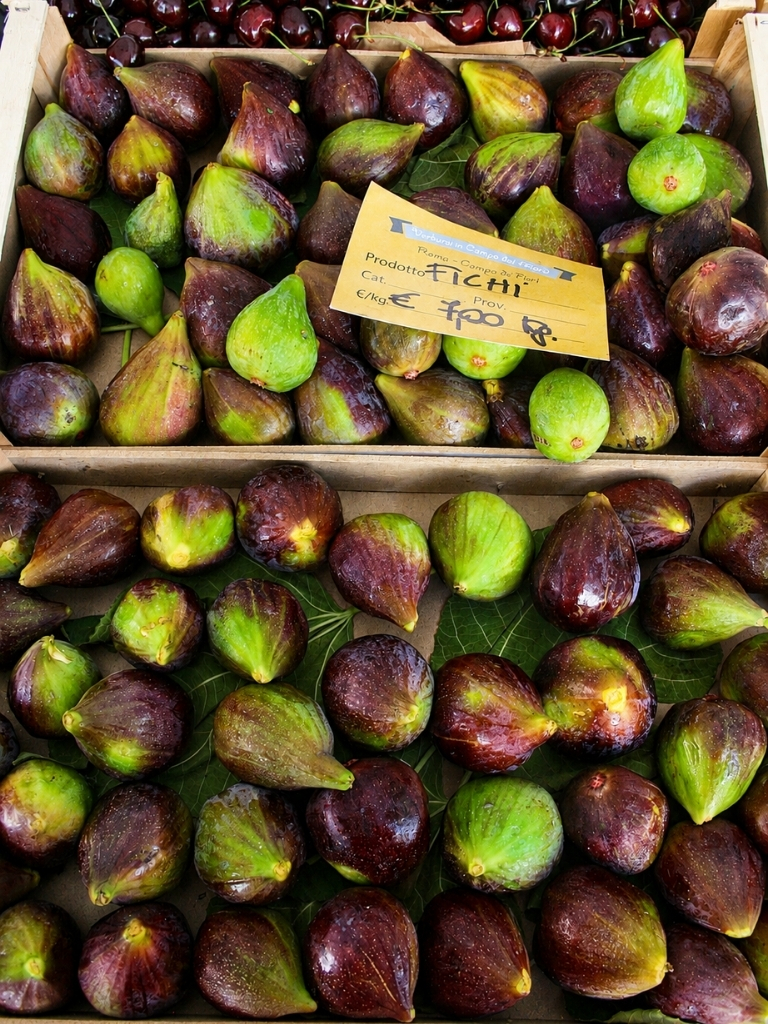
photo © Eleonora Baldwin
Others have dark purple skins and flesh that looks almost like berry jam. By the end of August, the settembrini are at their sweetest: soft, fragrant and so ripe that they seem to collapse under the slightest pressure. Their season, as their name suggests, is short, and that is part of their appeal. By the end of September they will be gone. Fresh figs demand to be eaten immediately. They cannot be forgotten at the back of the refrigerator or saved indefinitely for another occasion. When someone arrives with a basket picked from a garden or a tree in the countryside, everyone understands that the clock is already ticking.
There are suddenly figs for breakfast, figs for lunch, figs with cheese and figs pressed between slices of bread or packed into a tart. Any fruit that remains uneaten will soon become jam.
Choosing Figs at an Italian Market
Selecting figs requires a different instinct from choosing apples or pears. A ripe fig will rarely look perfectly firm and polished. Its skin may be slightly wrinkled, and small cracks can appear near the base. The neck may bend gently, and the fruit should feel heavy and tender. A fig that looks flawless but remains very firm may have been picked too early. Once removed from the tree, figs will soften, but they will not develop the same depth of sweetness as fruit allowed to ripen fully on the branch.
At an Italian market, it helps to ask which figs should be eaten immediately. Quali sono da mangiare subito? A good vendor will often select the softest fruits individually, placing them in a small tray or paper bag with more care than almost any other fruit.
Once home, I keep them in a single layer and eat them as soon as possible. Washing is best left until just before serving. Moisture and pressure can quickly damage their thin skins. Their fragility can be inconvenient, particularly when carrying them home on public transport or through crowded streets. It is also what makes them feel so seasonal. Fresh figs resist long storage and careless handling. They taste best close to the place where they were picked off the tree.
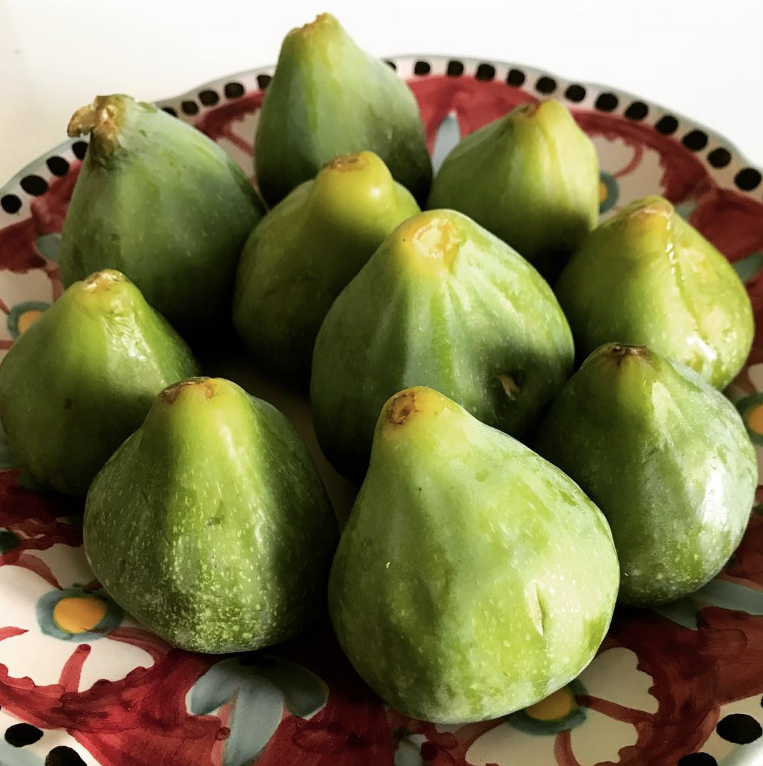
photo @ Eleonora Baldwin
How to Eat Figs Like an Italian: Unpeeled
The simplest way to eat a fig is also one of the best. At home, I usually remove the stem, open the fruit with my fingers and eat it in one or two bites. Whether the skin should remain on is a matter of personal preference and, in many Italian households, surprisingly strong opinion. Some people peel every fig meticulously. Others eat the skin without thinking twice. Much depends on the variety and thickness of the peel. A tender, perfectly ripe fig may need almost no preparation, while a thicker-skinned one can be easier to enjoy once peeled.
Fresh figs and cantaloupe melon often arrive at the beginning of an Italian meal alongside cured meats (more on that later). But since fruit is commonly served as its own course rather than transformed into a formal dessert, it also appears with peaches, plums and other stone fruit of summer.
Their flavor is naturally rich, yet the best figs also have a fresh, slightly green quality beneath the sweetness. The flesh is soft and almost creamy, while the tiny seeds provide a delicate crunch.
Here are the Many Ways to Enjoy Figs at the Table (or Straight off the Tree)
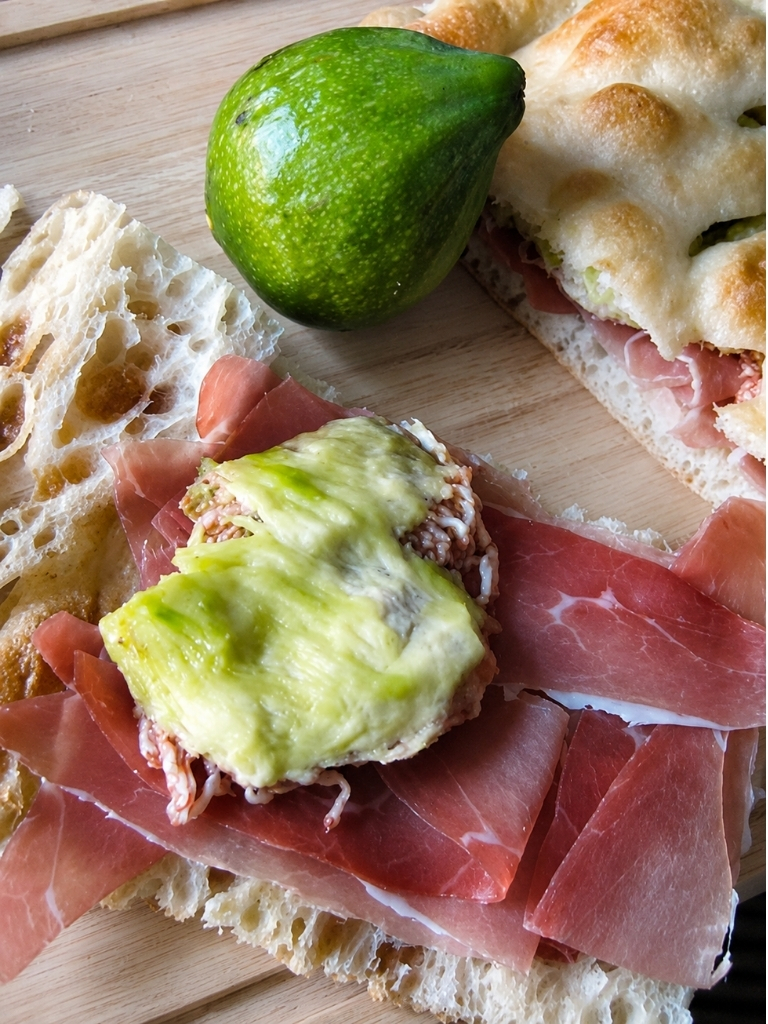
photo © Eleonora Baldwin
Pizza e Fichi, a Roman Late-Summer Ritual
The expression mica pizza e fichi belongs to Roman slang. It is used to emphasize something that is important, valuable or impressive. Pizza and figs, in this saying, represent something ordinary and modest. Although, anyone who has eaten them together in late August may find that judgment totally unfair. But we’re not talking about a pizza pie here. Growing up in Rome, I learned that figs belong inside the local flatbread called pizza bianca. This is not a focaccia, as it has the texture and cooking time of bread, not pizza dough.
I also learned that pizza e fichi has a third, very important ingredient in this delicious equation. Usually holding the starring role in any kind of sandwich, in pizza e fichi, prosciutto plays second fiddle. It’s all about the figs.
Roman-style pizza bianca is baked in long oblong or square slabs, dimpled by the baker’s fingers and seasoned with only a little olive oil and salt. The surface is lightly crisp, while the inside remains airy and elastic, with bubbles and air pockets provided by the sourdough starter. It can be eaten alone, torn into pieces in the bread basket, or sliced horizontally and stuffed like a sandwich. Enter thinly sliced prosciutto from Parma or Friuli, and the figs, smashed messily in between. The sweetness of the fruit settles into the salty crumb and enveloped by the fatty cured meat, creating one of those combinations that feels both obvious and surprising.
The success of pizza, prosciutto and figs depends largely on the quality of the ingredients. The pizza should be freshly baked and just slightly warmed, the prosciutto sliced very thinly, and the figs soft enough to spread almost like jam.
Many contemporary versions include burrata, balsamic glaze, honey or herbs. These can be delicious, though I remain especially fond of the simplest Roman version.
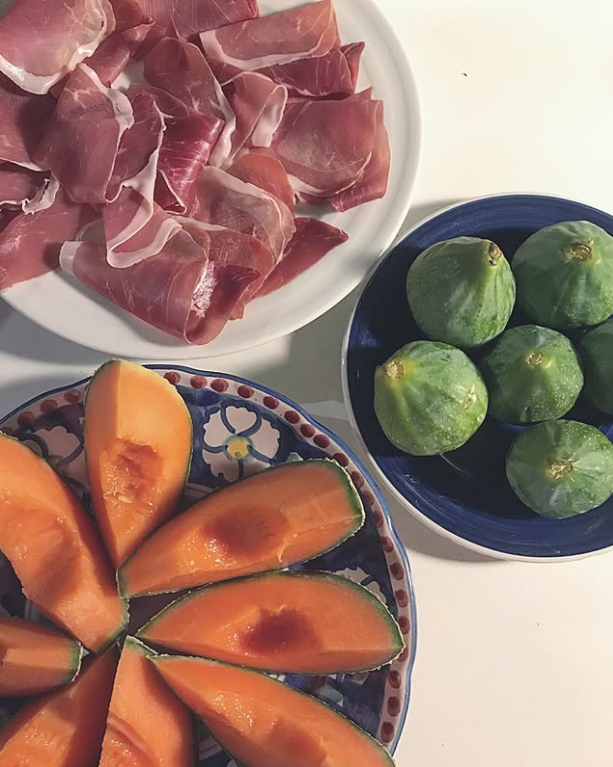
photo © Eleonora Baldwin
Figs and Prosciutto Beyond the Sandwich
Figs and prosciutto also work beautifully without bread. A plate of fresh figs, quartered or split open by hand, can be served with delicate slices of prosciutto as a late-summer antipasto. The combination follows the same logic as prosciutto and melon, although figs create a richer and more concentrated pairing. Their flesh is dense, honeyed and almost jam-like. Against the salt of cured pork, that sweetness becomes more balanced and complex. I prefer to keep the plate uncomplicated. A few ripe figs, good cured meat and some bread are enough. If the fruit is exceptional, too many additions can quickly distract from it.
Speck offers a smokier alternative, while capocollo or salami can create a more rustic plate. These will distract from the figs, however. Strongly spiced cured meats should be used carefully, since they can easily overpower the delicate fruit.
Fresh Figs and Italian Cheese
Fresh figs feel equally at home beside cheese. With ricotta, they become soft, mild and almost dessert-like. I like them on toasted bread with fresh sheep’s-milk ricotta, especially when the ricotta has enough tang to balance the sweetness of the fruit. A small drizzle of honey can be added, although the ripest figs rarely need it.
Creamy cheeses such as robiola, chèvre, stracchino or burrata create similarly gentle combinations. These pairings work well for breakfast, as an afternoon snack or as part of a simple meal when the weather is too hot for cooking.
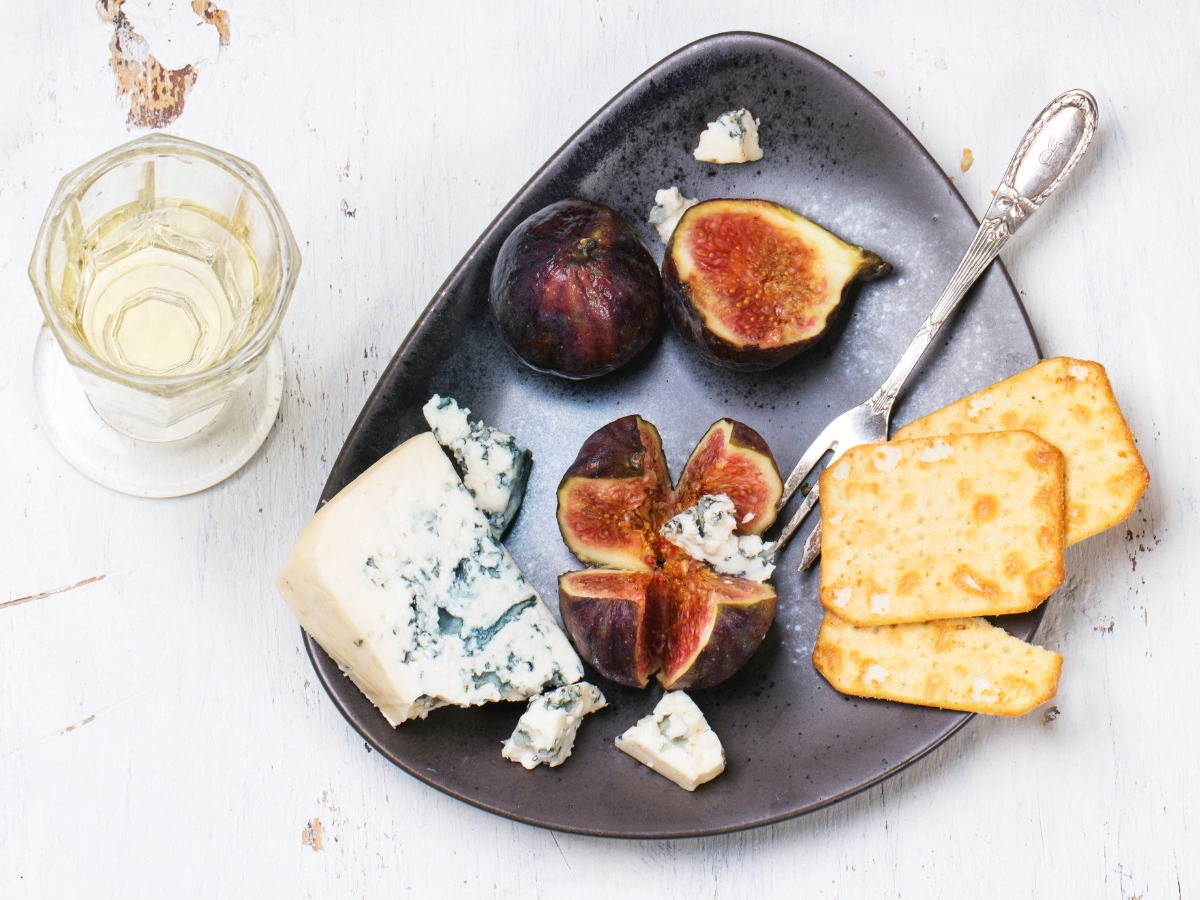
photo © NatashaBreen licensed through Canva.com
Aged pecorino offers a sharper contrast. The firm, salty cheese and soft fig seem to improve each other. The same is true of chunks of Parmigiano Reggiano, whose nuttiness complements the fruit particularly well.
Blue cheese produces the most intense pairing. A dark, ripe fig beside Gorgonzola creates a contrast of sweetness, salt and pungency that feels especially suited to the final days of summer.
When I assemble a cheese plate at this time of year, figs are usually the first accompaniment I reach for. They require no cooking, chopping or seasoning. They simply need to be ripe.
Fresh Figs for Breakfast
Fresh figs also make their way onto the breakfast table. The classic Italian breakfast eaten at a coffee bar may revolve around coffee and a cornetto (don’t call it croissant), but breakfast at home offers more room for seasonal fruit. Figs can be torn into plain yogurt, spooned over soft cottage or cream cheese, or placed on toasted bread. Walnuts, hazelnuts or almonds add texture, while nut butters can help when the fruit is slightly underripe.
One of my favorite breakfast combinations is toasted bread, fresh ricotta and figs. The toast gives structure, the ricotta adds freshness and the fig provides all the sweetness.
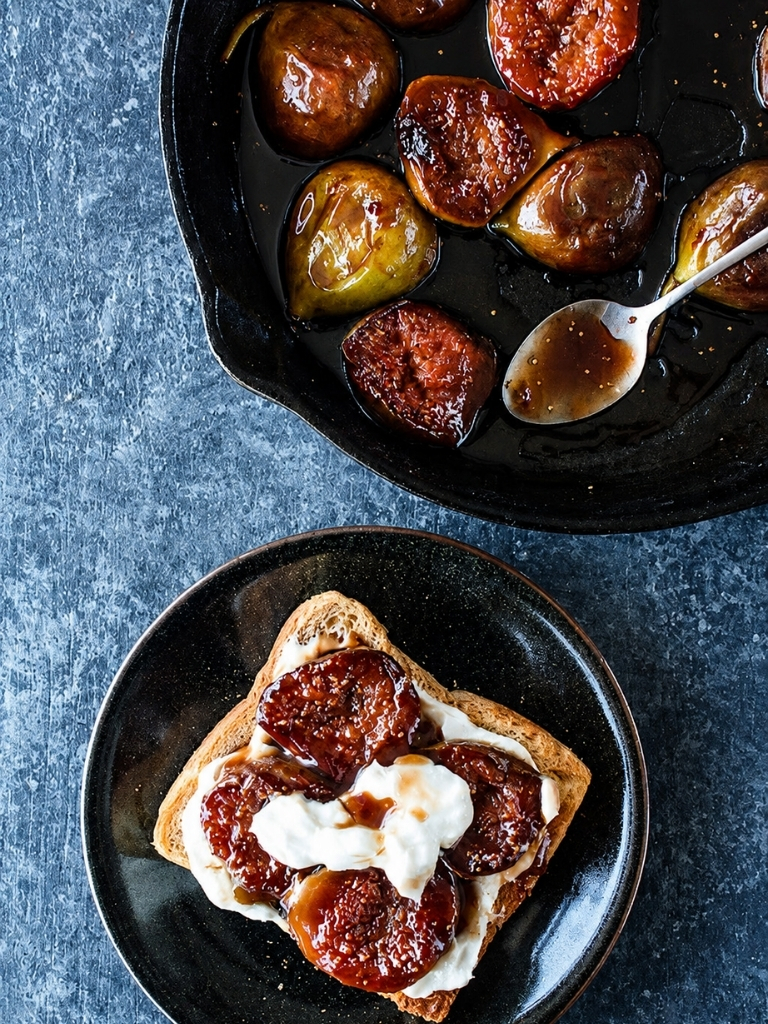
photo © dessertedgirl.com
Figs With a Little Heat
Fresh figs need no cooking, though a little heat can transform them completely. One of my favorite ways to use very ripe figs is to caramelize them briefly in a pan. Cut in half and placed face down with a little butter or sugar, they soften at the edges while keeping their shape. A dash of balsamic glaze adds acidity and depth, balancing their sweetness without overwhelming it. Served warm, these caramelized figs make a dreamy topping for vanilla or fiordilatte gelato. The contrast between the hot fruit and cold gelato is reason enough to turn on the stove during the final days of August. They are equally good spooned over ricotta, mascarpone or thick yogurt, with the pan juices poured over the top.
Figs are also especially well suited to a Tarte Tatin. Warmed in a pan and covered with pastry, they become glossy and almost jam-like as they bake. Once the tart is turned upside down, the fruit appears rich and deeply caramelized, with slightly crisp edges. I like it served with gelato, crème fraîche or lightly sweetened ricotta.
Figs also belong naturally in crostate, almond tarts and simple olive-oil cakes. Lemon zest brightens their sweetness, while rosemary or thyme adds a subtle herbal note. Baking is particularly useful when the fruit is extremely ripe and beginning to lose its shape: what looks too soft for the table can still become something fragrant and generous.
Whether cooked quickly in a pan or slowly beneath pastry, figs respond beautifully to heat. Their juices thicken, their sweetness deepens and the final days of summer suddenly taste even more indulgent.
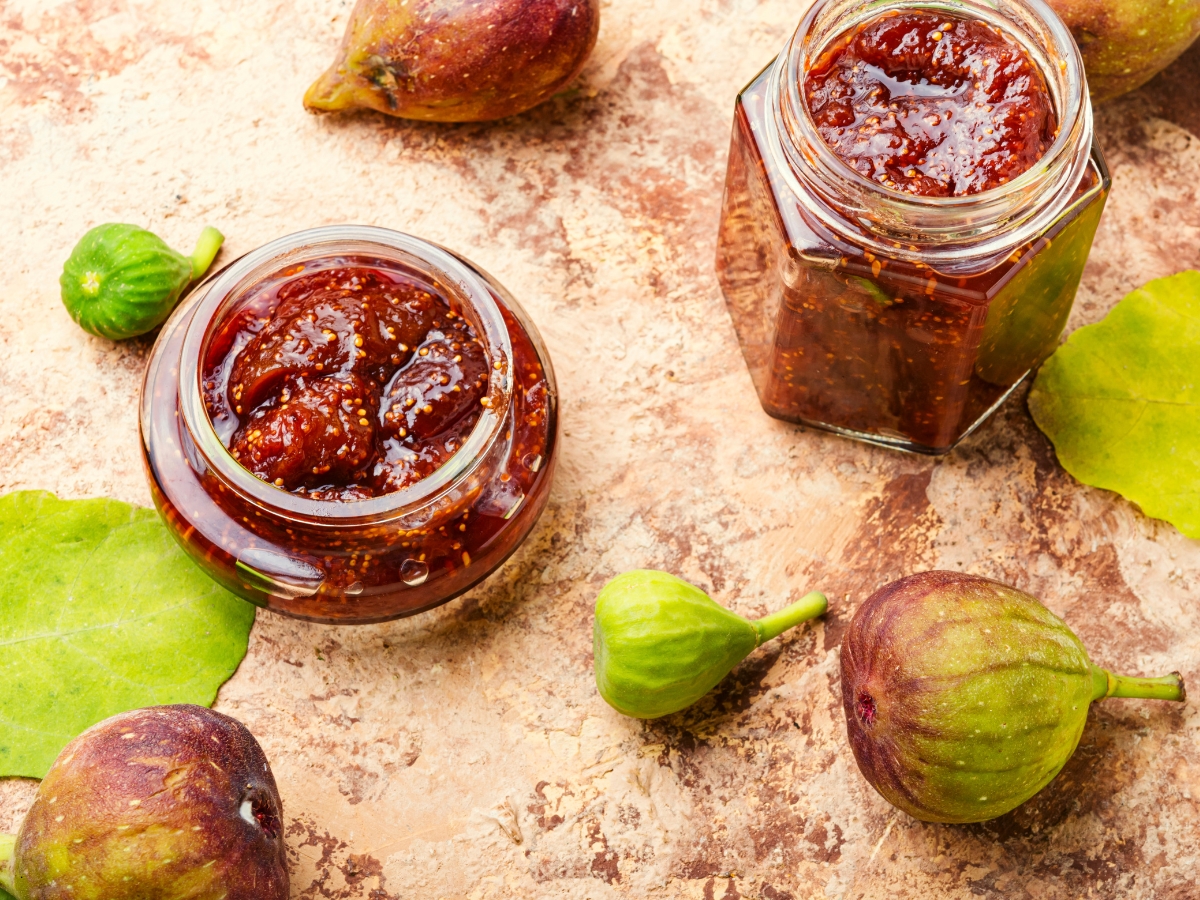
photo © Nikolay_Donetsk from Getty Images licensed through Canva.com
From Fresh Figs to Marmellata
Eventually, every productive fig tree creates the same challenge: too many ripe fruits arriving at exactly the same time. Friends and neighbors begin handing them out in bags and baskets. Breakfast, lunch and dinner all start to include figs. Even the most enthusiastic household eventually realizes that the fruit will ripen faster than it can be eaten. This is when the season moves from fresh figs to preserving.
The fruit is transformed into jam, or dried for the winter. Preserving allows the flavor to continue long after the trees have emptied.
Casa Mia’s recipe for Simple Fig Marmellata captures this moment of abundance. Fresh figs are cooked slowly with sugar and lemon until they become soft, glossy and concentrated. Marmellata is delicious, but opening the first jar always feels like an acknowledgment that the brief fresh-fig season is ending.
By September, familiar routines return. The days become shorter, and summer fruit gradually gives way to grapes, pears, apples and the first autumn produce like persimmon and pomegranate. Before that happens, there is still time. Buy the figs that seem almost too soft. Carry them home carefully. Eat them with pizza bianca, prosciutto or pecorino cheese. Spoon them over ricotta at breakfast, or simply open one with your fingers and eat it with your eyes closed.
The last figs of summer will not wait.