Every year, half way through October, the Amalfi Coast exhales. The sky is bright blue again. Ferries, busses and car parks become less crowded. Restaurant owners begin counting the days until they can finally close for the season. Hotel shutters close one by one. The frantic pace of summer softens. It is the end of the season for visitors. For the people who live here, it is a chance to rest and restore before Easter arrives and the whole beautiful circus begins again.
For me, October has always felt like something else
October is a return. Not to the Amalfi Coast as it is today, but to the places of my childhood. The one that lives in memory. The one that raised me. I grew up spending summers on this stretch of coastline, and when I think about Positano, Praiano, Conca dei Marini, Li Galli, Nerano, the Amalfi waterfall, our favorite swimming spots “il germano” and “la cattedrale” – and all the little corners in between – I sometimes wonder whether I am remembering places, or people. Whether I am mourning a coastline, or a time in my life. The truth, I suspect, is both.
The Amalfi Coast was the setting of some of the happiest moments of my life, and perhaps that is why every village, every cove and every stretch of coastline still carries such emotional weight.
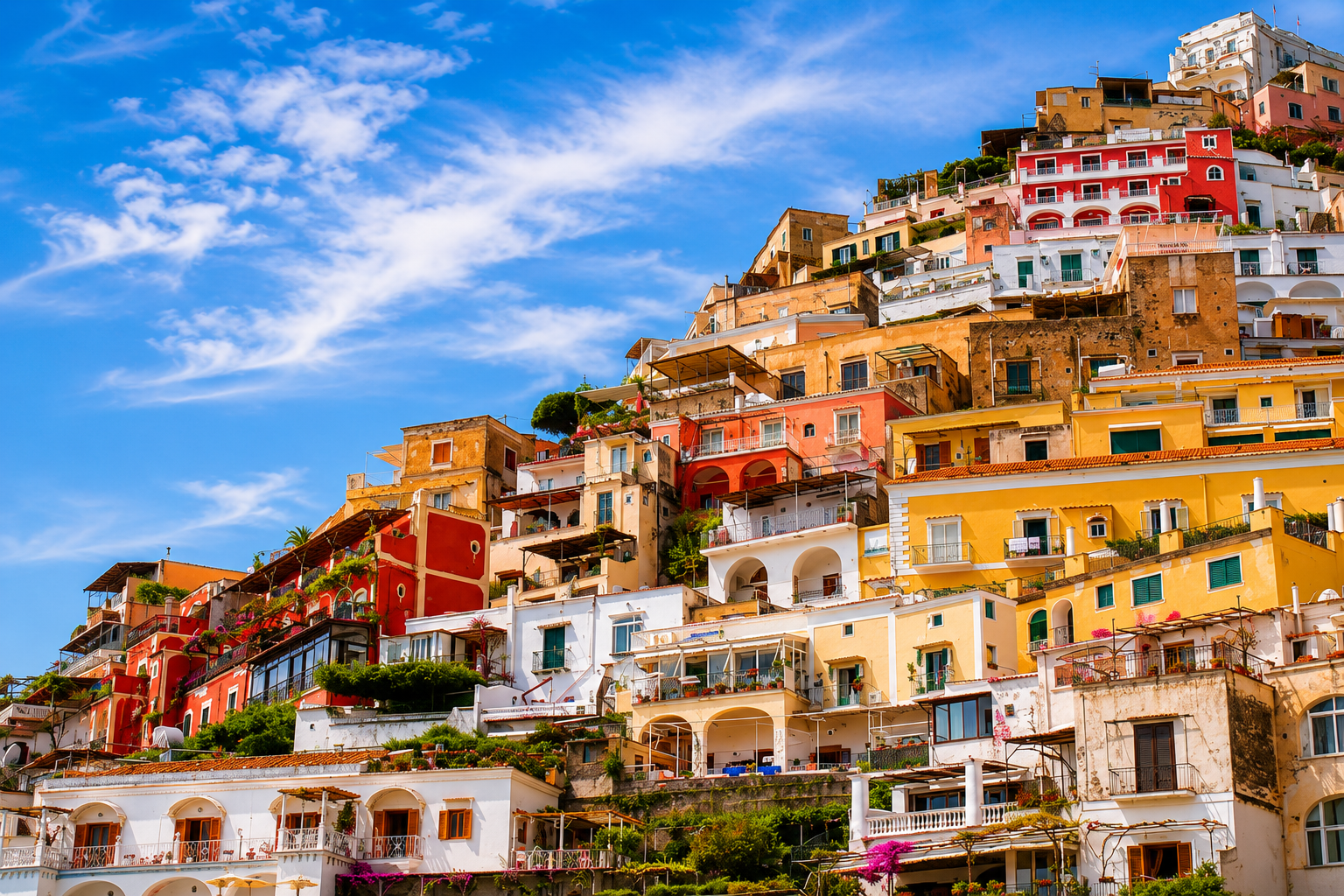
photo © Eleonora Baldwin
Positano, before it became a backdrop for selfies
The Positano I remember smelled of wisteria, orange blossoms and boat fuel. Days were punctuated by salty lips and cicada song. Sunset came late, after a quick shower we’d race back down to sea level for dinner at Buca di Bacco, the hotel restaurant owned by our friends, the Rispoli family.
Those summer evenings seemed to last forever. During our after dinner passeggiatas, hypnotized by the moon painting a perfect silver carpet on the water, we’d tune in to the unhurried, gentle pace of Positano. Families lingering in doorways. Shopkeepers who knew familiar faces, smiled at us outside their stores as they started closing up for the night. Like Gianni, the polyglot philosopher newsstand owner; the quiet old tobacconist; the chef out for a quick smoke at the end of his shift. And us children wandering the entirely pedestrian beach area of town in between bites of octopus salad and dessert.
There were no “must-see spots” back then. No queues for photographs. No influencer lists highlighting the perfect angle for social media content. Positano was not yet a backdrop. It was simply a village suspended between mountain and sea, beautiful without trying to be.
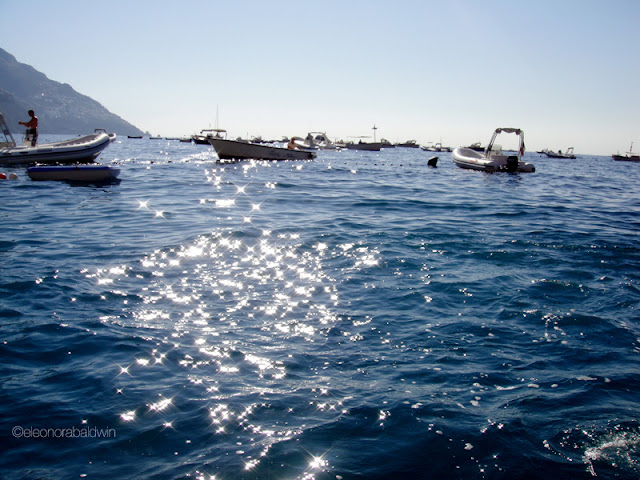
photo © Eleonora Baldwin
Today, thousands arrive searching for an image they have already seen online. They stand where others have stood, photographing what others have photographed, often without noticing the life unfolding just beyond the frame. In more recent times, when I walk through those same alleys and the lungomare boardwalk, I barely recognize where I am.
And yet, every now and then, usually in an early October morning or at sundown, I catch a glimpse of the Positano of my childhood. A doorway left open, the fresh scent of laundry detergent wafting out. A grandmother watering plants. In her bikini and pearls. Old “Fratillo”, the town fisherman, heading home after a good night out at sea. And for a moment, the village I remember returns. My heart flutters at the memory.
The mystery of Li Galli
Even now, catching sight of the Li Galli islands rising from the water on the horizon, I feel something stir inside me. As children, we listened to stories of Homeric syrens that were said to inhabit those islands. They felt mysterious, suspended somewhere between legend and reality. The dolphin sightings. The small sharks said to occasionally peruse these waters (traumatic after watching Jaws at the local cinema – yes, Positano had a cinema once). Not to mention the iillustrious owners of the past.
As a ballet enthusiast, knowing that “Rudy” Nureyev lived here and swam in these waters brings me back to a time when celebrities had the freedom of skinny dipping in their owned sea space without the fear of being caught on camera by paparazzi, or worse, “getting canceled” for it. Folks used to respect people’s privacy. Today, Li Galli appears in countless drone videos and travel reels. Yet no camera can capture what made that tiny cluster of islands magical for me.
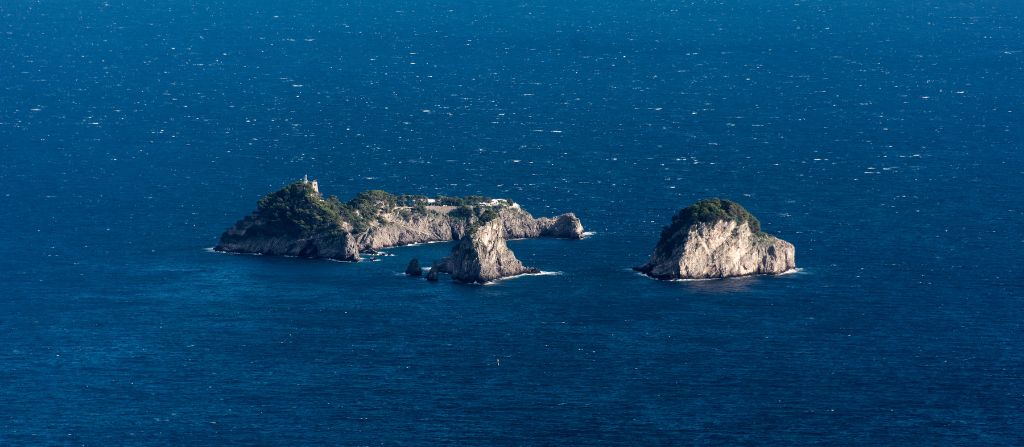
photo ©visualgiga from Getty Images, licensed through Canva.com
Approaching Li Galli by boat always felt like entering another world. The sea was impossibly dark blue, the sun rays sunk down and would get lost in a spot somewhere deep, deep below. I was afraid to swim there. I always kept close to the San Giovanni, the thick gozzo sorrentino that doubled as leisure vessel by day and fishing boat by night. Old Fratillo at the helm, singing ballads and serenades. Maybe he had seen the syrens in his youth.
The first crudo di mare
On one of these such day trips, after a fortuitous catch of baby shrimp lapping the sides of the boat using a small butterfly net, the “retino” he always kept on board, net Fratillo took a shrimp the size of my pinky, pulled its head off and offered me the tail. I was horrified. His huge callous hands insisted. I closed my eyes and opened my 9 year-old lips. The surprise was life-changing. Sweet and buttery. Briny and slippery. The best the Mediterranean Sea had to offer: fresher than fresh. I had been inducted, under the watchful eye of my mother, to the secret ritual of crudo di mare. She told me later that the very same scene had played out when she was my age, many years before. Fratillo had similarly fed her a raw shrimp out of the water. Life-changing for her, too.
Conca dei Marini for “the best naps”
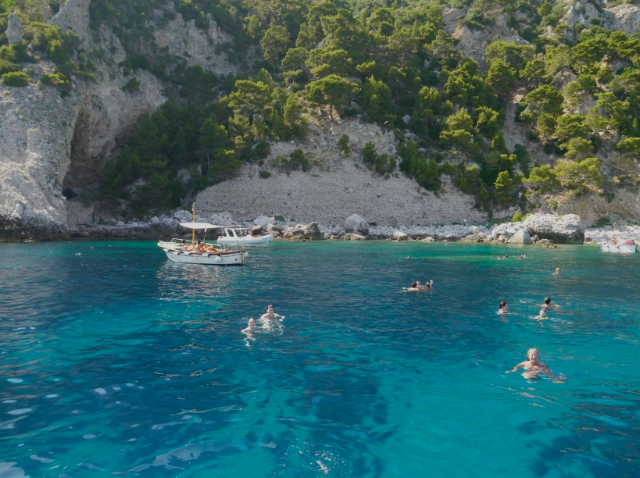
The San Giovanni moored for a swim near Conca dei Marini – photo © Eleonora Baldwin
Entering Conca dei Marini by sea always felt like disclosing a secret. The sea of that little cove seemed impossibly turquoise. Long lunches on a terrace. Afternoons that drifted by without structure. An unknown yacht passing in the distance could become the day’s most significant event. Back then, nobody spoke of “hidden gems.” Places were allowed to remain hidden. They didn’t need to perform, they didn’t need to market themselves, no need to become “viral”. They simply existed, quietly and confidently, as they had for generations.
Perhaps that is what I miss most, the fact places like Conca were little known. They were “our” secret spot. One of my Dad’s most sweet memories was telling us about “the best nap he’d ever had, ever”. It was late afternoon, after a long swim, he was resting on the slippery rocks of Conca dei Marini, and dozed off, his chestnut hair riffled by a gentle breeze. I like to think he is there now, young and sleepy on the slippery rocks.
Grilled mozzarella at Laurito beach
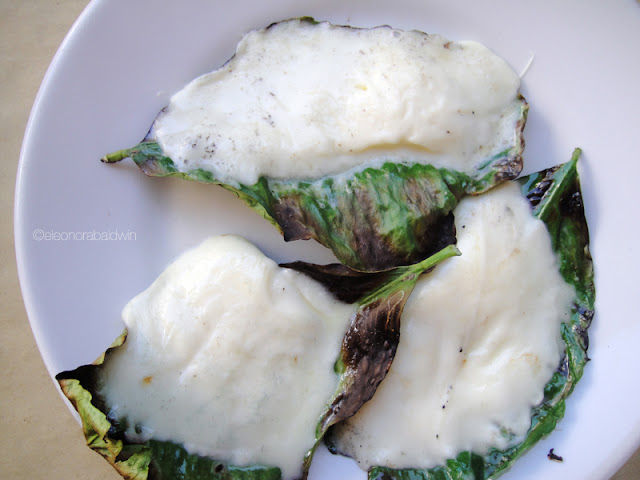
photo © Eleonora Baldwin
Some of my happiest memories begin with a boat shuttle from the dock in Positano to Laurito, and having lunch at Da Adolfo. Very few people knew about this place. Only locals and a handful of Neapolitans vacationing in the area. Now there’s a waiting list to be seated. And the free shuttle boat with “the big red fish” on the mast won’t let people on without a reservation.
That’s the policy Sergio, the owner of the beach hut on stilts that all the influencers are “discovering”, has to enforce because too many furbetti scam the system of the free ride by bringing a packed lunch or sitting at the competition next door. We would tumble off the earliest shuttle and swim all morning.
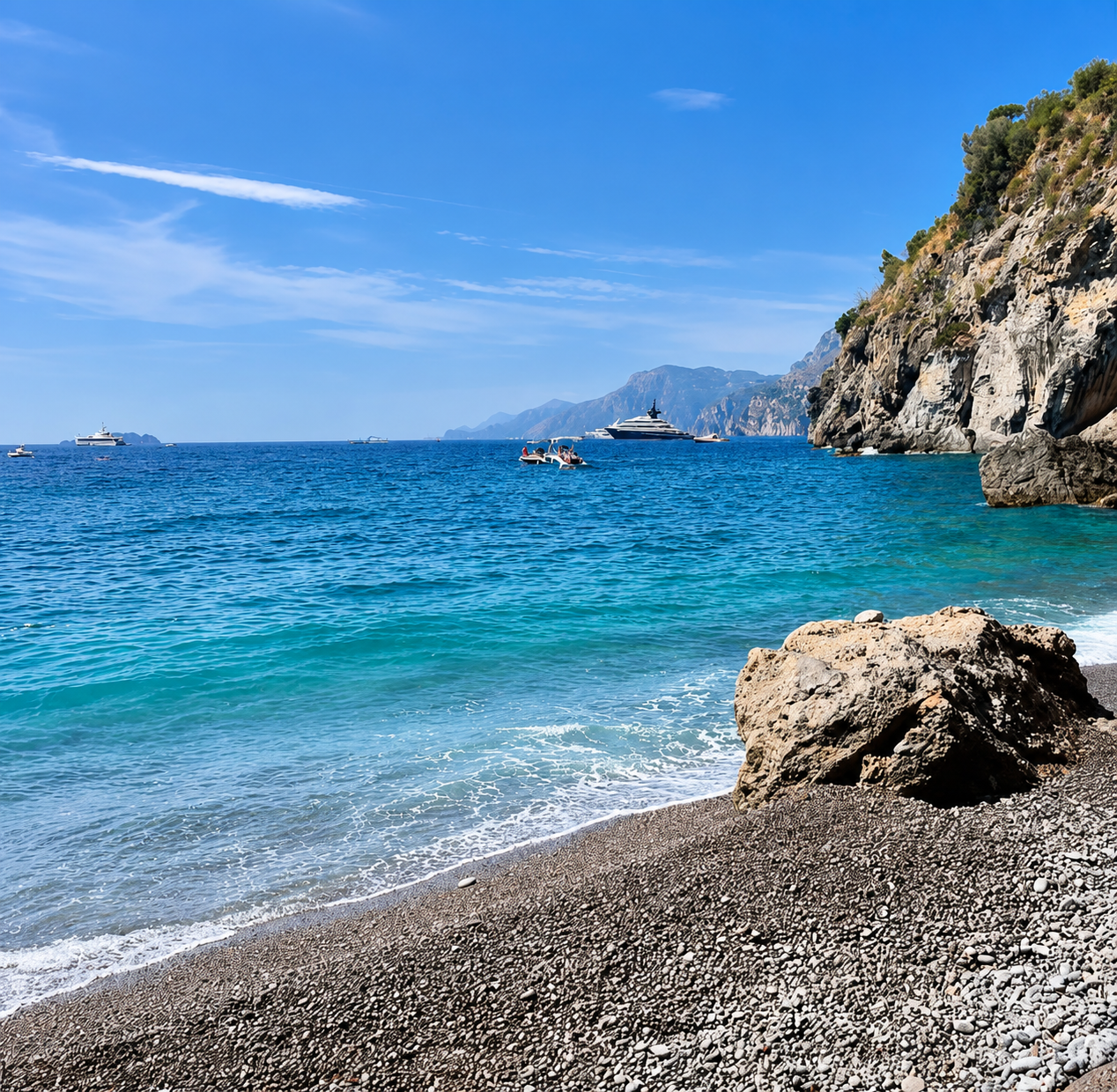
photo © Eleonora Baldwin
Then, salty, hair stiff from seawater and blissfully unconcerned about appearances, we’d choose a table in the front. We’d spend entire days barefoot and in our bathing suits and thought nothing of walking straight from the sea to lunch. I remember the mozzarella grilled on lemon leaves. Bowls of zuppa di cozze and mountains of crusty bread to sop up the sauce. Pitchers of cold wine with chunks of peaches floating in them. The cicadas lulling us to sleep on the pebbly shore after the gargantuan meal.
I miss the Laurito of when I was fifteen. I miss sunbathing on that small beach with my mom and assuming, with the certainty only children possess, that life would always be that way. That summers would never end. That the people I loved would always be waiting for me at the table. The mozzarella baked on lemon leaves tastes slightly different now, though I suspect the recipe has not changed at all.
Nerano on the big rock
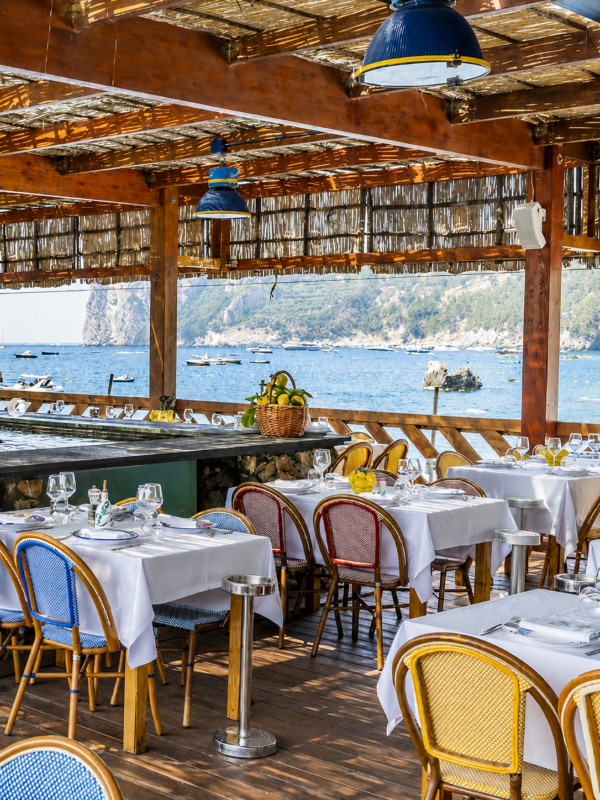
photo © ristoranteloscoglio
The beach of Nerano, called Marina del Cantone, remains one of the places closest to my heart. Before it became famous on international restaurant lists and TV shows, it was simply Nerano. The beach, the fishing boats, the smell of sun-warmed wood of Assunta’s wooden deck atop the big rock that gave the name to her restaurant, Lo Scoglio. Lunches that lingered into windy afternoons. Conversations that lasted longer than meals. The long array of small plates carrying antipasti of vegetables and fruits grown on the property in the back. The fish caught that morning by Fratillo on the way over. The pasta with zucchini that dreams are made of.
Assunta is now resting over the rainbow. Her family continues her legacy, but there’s hardly any kids peeking at the centenary grouper and the other inhabitants of the central aquarium surrounding the scoglio. Now it’s mostly VIPs stepping off yachts.
What’s changed (me, included)
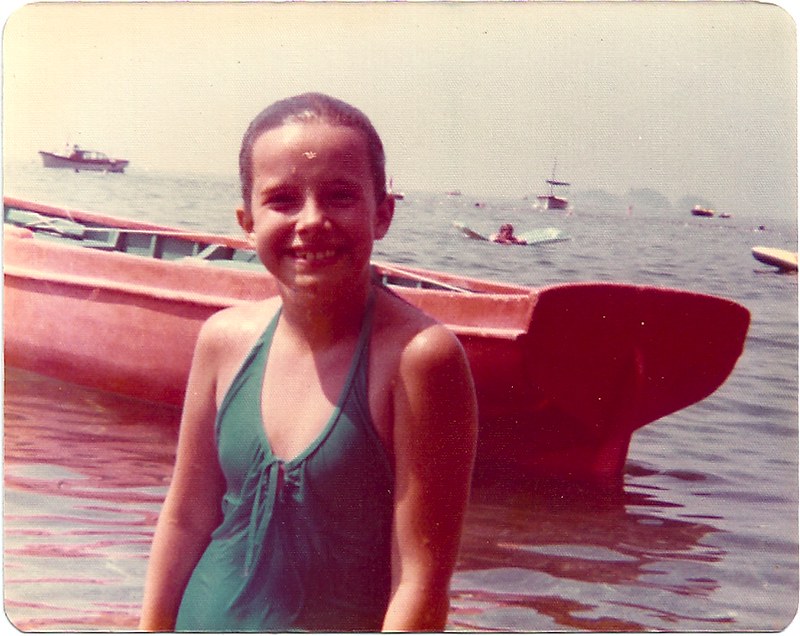
Positano, 1977 – photos by my father, Peter Baldwin
It would be easy to blame social media for everything. And certainly, there are days when the selfie sticks, queues and relentless hunt for viral moments make me long for a quieter coast. Places once discovered slowly are now consumed quickly. Many visitors arrive with a checklist. “Get the shot!” or, “Nobody eat, we need to video this!” The coveted lunch reservation. The selfie. The toasting Spritz shot. And then on to the next viral destination.
The Italian expression usa e getta means “use and throw away.” Sometimes I worry that we risk treating places that way. But if I am being completely honest, that is only part of the story. The sadness I feel has deeper roots. The truth is that I am no longer the sunburned girl who experienced those summers doing handstands in the shallow water.
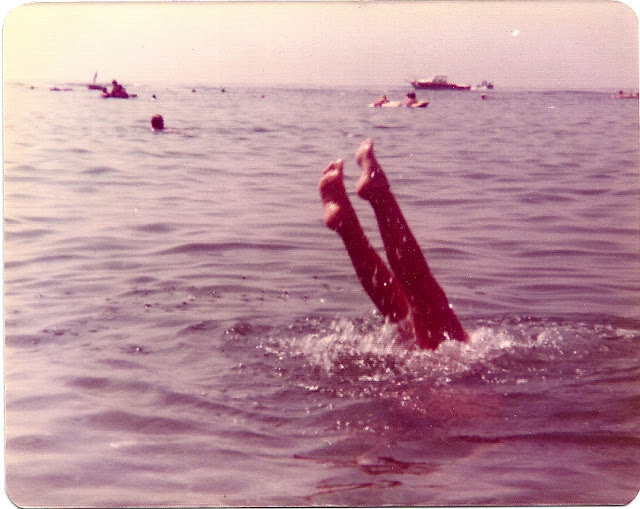
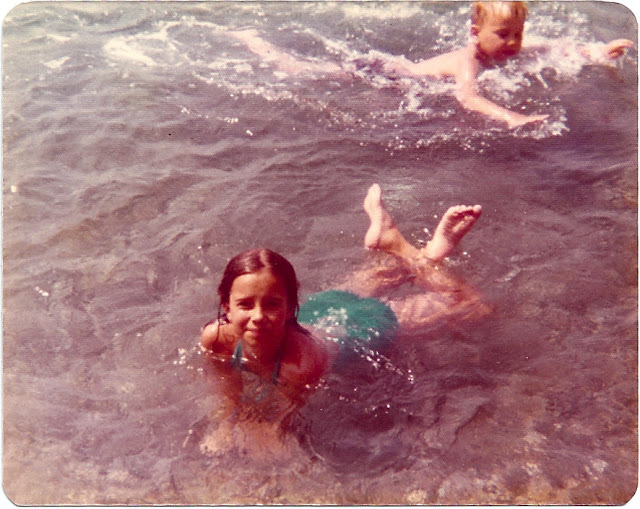
Positano, 1977 – photos by my father, Peter Baldwin
The sea is still beautiful. The cliffs are still magnificent. The sunsets are every bit as spectacular. What has changed is that my parents are no longer beside me. Time has passed. What has changed is that now I understand that summers end. I know I will never find the exact Amalfi Coast of my childhood again. How could I? The girl who loved it no longer exists, either.
But every October, when the light softens and the villages exhale, I come so close to being her again. Right there, under that bright blue sky.
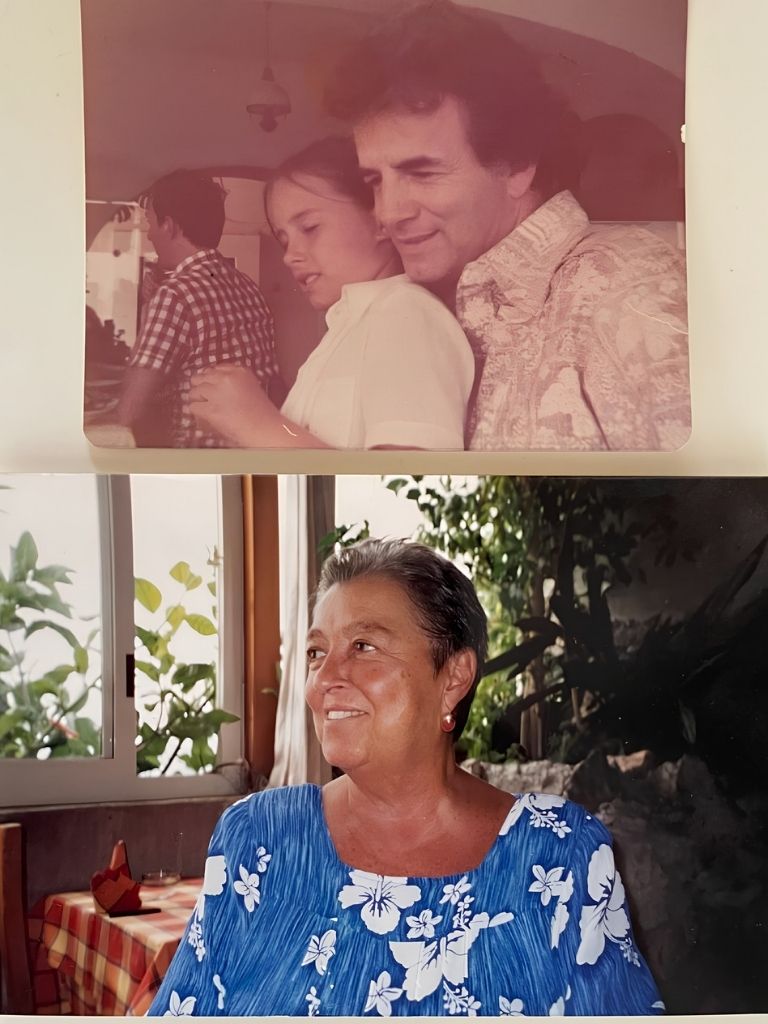
photos © Peter and Eleonora Baldwin