Few Roman pastries are surrounded by romance and history as the beloved maritozzo (plural: maritozzi). More than just a cream-filled bun, this iconic sweet tells a story woven into centuries of Roman tradition.

Maritozzi Through History
According to local legend, young suitors once presented maritozzi to their future brides on the first Friday of March. Hidden inside the soft pastry was a ring, coin, or piece of jewelry, a symbolic promise of marriage. Once married, the suitor would become her marito (husband). Even today, the word maritozzo carries echoes of affection and romance.
Another version of the story paints an equally charming picture. Women wanting to marry would bake heart-shaped maritozzi and give them to the city’s most eligible bachelor. He would choose his future wife based on whose pastry captured both his eye and his appetite.
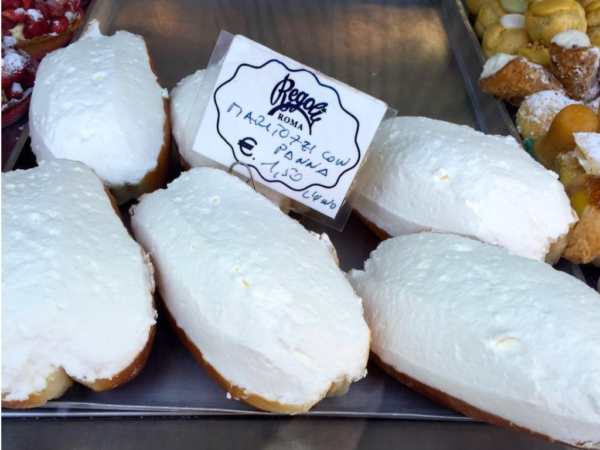
Long before the modern whipped cream-filled version appeared in Roman pastry shops, the original maritozzo known as the Maritozzo Quaresimale was enjoyed. This smaller bun was eaten during Lent. Made with raisins, pine nuts, and candied fruit, it was considered a rare indulgence during the fasting season. This version is my favorite. Whenever I come across one, I can’t resist.
The Maritozzo Today
The classic Roman maritozzo has evolved into a decadent dessert. Split down the middle and filled with slightly sweetened whipped cream, it is one of Rome’s most recognizable dolce found in the Eternal City and beyond. We enjoy them for breakfast with a cappuccino, as an afternoon snack, or even after a night out in the city.

Modern interpretations continue to put new spins on the traditional recipe. Some bakers enrich the filling while others brush the bun with flavored syrups or glazes that add depth and character to every bite. You’ll also find savory options at aperitivo time stuffed with smoked salmon, chicken salad, or eggplant.
Whether enjoyed in a historic Roman café or savored during our Rome Food Discovery tour, the beloved maritozzo remains a delicious reminder that in Italy, every recipe has a story. Or two.