Food in Italy is not an accessory to the New Year, it is the ritual. December 31 is the feast of San Silvestro. January 1 is Capodanno. Between them, Italians sit down to eat with intention. Every dish is chosen for what it represents. Lentils for money, pork for abundance, grapes for good luck. Every region has its own menu, but the purpose is the same: to begin the year full.
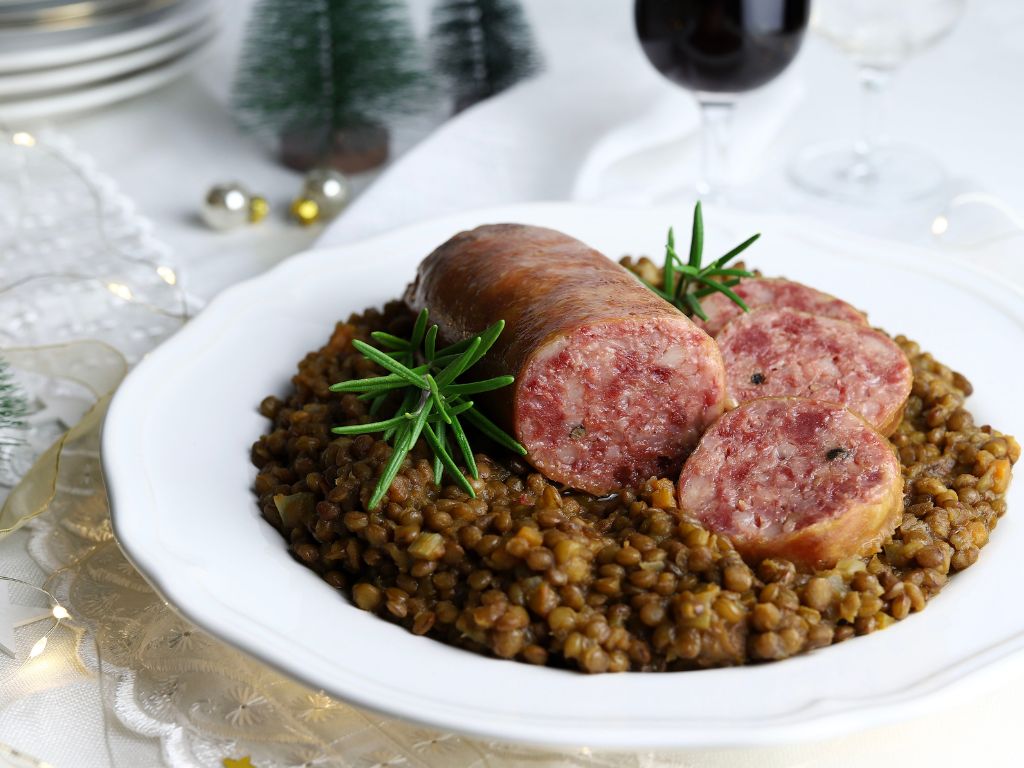
Image sourced Canva Pro 2025
Whats Always on the Table on the last Night of the Year
The classic pairing of zampone or cotechino with lentils is served without question. It’s tradition, not trend.
Lentils and Luck
Lenticchie are cooked slowly with garlic, onion, and herbs, and are always present on the New Year’s Eve table. Their coin-like shape makes them a symbol of prosperity. In many homes, they’re the very first bite of the new year at midnight. They’re served plain, or with Cotechino, and eaten by everyone at the table.
Pork and Prosperity
Cotechino is a slow-cooked sausage made from pork, fat, and spices. Its texture is soft and its flavor deep. It’s sliced into thick rounds and served hot, often over lentils. The fat content and shape unmistakably stand for richness and the hope for a prosperous year.
Zampone is a variation of cotechino sausage stuffed into the skin of a pig’s trotter. It has the same ingredients but a different presentation. In the north, it’s the traditional New Year centerpiece. It takes hours to cook and is served with the same reverence as a holiday roast.

Image sourced Canva Pro 2025
Regional Variations
Emilia-Romagna – In this region, dishes take on hearty proportions, zampone or cotechino served with lentils remain standard.
Veneto – The region of Venice, Verona and Padua may spotlight baccalà mantecato (creamed cod) or risotto cooked with prosecco.
Piedmont – Here, families may enjoy bollito (boiled meats) or pollo alla Marengo, served with shrimp and mushrooms, a Turin specialty.
Liguria – In the region home to Cinque Terre, and where Genoa is the capital, cappon magro, a layered seafood and vegetable salad, is common.
Trentino-Alto Adige – Mountain areas may offer canederli (bread dumplings) or polenta with fonduta (cheese fondue).
Lazio – In Rome and surrounding areas, the feast may start with battered and fried artichokes, followed by spaghetti alle vongole (spaghetti with clams) and baccalà fritto (fried salted cod).
Abruzzo – Families serve soups made from seven different legumes, as a symbolic act of abundance and unity.
Molise – While not specifically tied to Capodanno tradion, regional palate informs the holiday table. Dishes like scattone (pasta in red wine), pasta and bean soups, and local cheeses such as Caciocavallo di Agnone reflect winter traditions that may appear during festive meals.
Campania – The New Year often features seafood in the region of Naples, Sorrento and the Amalfi Coast: fried anchovies, octopus salad, eel, and other fresh catches. All paired to seasonal veggies and the ubiquitous insalata di rinforzo, a boiled cauliflower, anchovies and giardiniera salad. As the clock approaches midnight, struffoli, honey-coated fried dough balls, may still linger on the table after Christmas celebrations.
Puglia – To ring in the new year, locals eat fried panzerotti, roasted eel, or lamb with lampascioni (pickled wild hyacinth bulbs); and desserts like cartellate or honey-coated purciduzzi.
Sicily – New Year’s Eve dishes include local classics like caponata, sarde a beccafico (stuffed sardines), and desserts like cassata and cannoli. Baked pasta like timballo appears at the table, surrounded by olives, citrus, and sweet wine, and fennel and orange salad.
Sardinia – This sensational island celebrates the new year by serving Porceddu (roast suckling pig), pane carasau, lamb stews, and seadas, sweets made with fried dough filled with pecorino and drizzled with dark honey. Speaking of sweet symbols…

Image sourced Canva Pro 2025
New Year’s Eve Desserts
These are always on the holiday table, scattered among bingo cards and clementine peels and nutshells.
- Panforte is a dense bread that’s chewy and packed with almonds, honey, and spices. This cake from Siena has been a staple since the Middle Ages.
- Mostaccioli are spiced cookies covered in dark chocolate. Common in Campania and Molise, they’re shaped like diamonds and flavored with cloves and citrus peel.
- Torrone is the holiday hard nougat made with honey, and studded with almonds, pistachios or hazelnuts. It’s broken at the table and passed around in uneven pieces.
- Dried Fruits and Nuts are another holiday staple. Dried figs are often stuffed with walnut meats, and plump Medjoul dates conceal a decadent sliver of chilled butter!

Image sourced Canva Pro 2025
What to Drink at Midnight
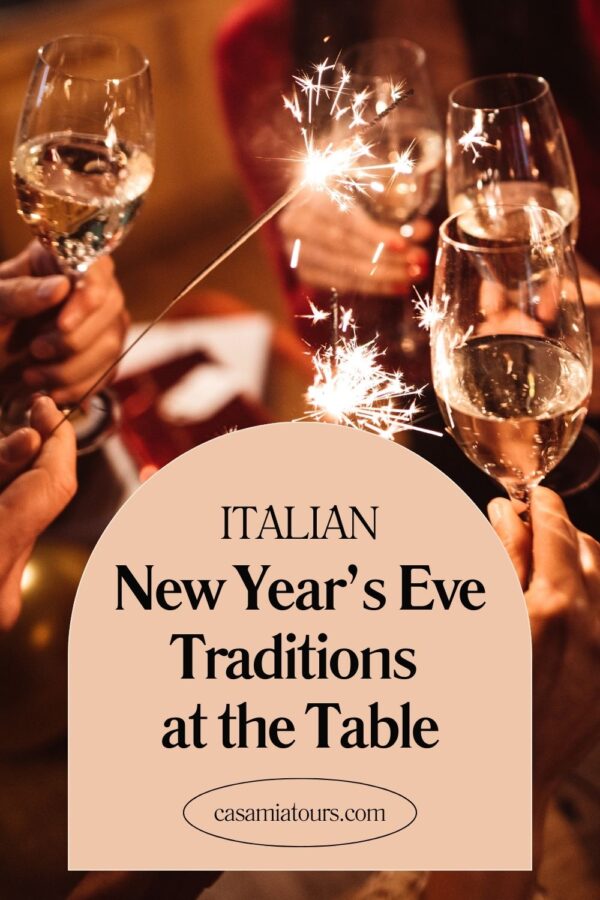
- Bubbles are the most traditional choice. Poured into glasses minutes before the clock striked midnight, ready for the first toast.
- Prosecco and Franciacorta are also served before and during the meal. Its lightness pairs well with fried or rich dishes.
- The sparkling wines from Canelli in Piedmont are served with panettone or dessert.
After-Dinner Spirits
Amaro made with herbs, bark, and citrus peel are the end of the meal digestivo. Every region has its own version. Grappa is served in small amounts, especially in the northern regions. Some sip it. Some toss it back.

Image sourced Canva Pro 2025
Traditions Beyond the Plate
Food leads the evening, but traditions beyond the table are also of paramount importance to ring in the new year.
- Tossing old things from balconies, this happens especially in Naples. Symbolic cleansing of the old year.
- Lighting firecrackers, sparklers or downright fireworks. Some regions have made this illegal. Folks do it anyway.
- Wearing red undergarments, proven to bring luck and fertility.
- Eating twelve grapes at midnight, one for each bell toll. A test of timing and superstition.
Join the Capodanno Table
When New Year’s Eve approaches, we prepare this meal with attention to history and family. We source the cotechino with our local butcher. We slow-cook the lentils until they are the perfect texture. We set the table with intention. And we always toast with something sparkling.
If you’re in Italy on December 31st, follow the fireworks into the kitchens. That’s where the year begins.